A bulk nail file order should not be approved based on color, logo, or carton count alone. Buyers need to confirm that the delivered construction, dimensions, abrasive surfaces, filing performance, customization, and packing all match the agreed specifications. The eight checks below create a practical review path for distributors, salon suppliers, and private-label programs. They can be used for a pre-production sample and repeated on shipment samples, with acceptance limits written into the purchase specification rather than decided after a defect appears.
Does the Nail File Material Stack Match the Specification?
Start with the physical product that was ordered. Two files can have the same silhouette while using different cores, cushioning layers, or abrasive surfaces. That difference affects stiffness, filing feel, durability, and the type of inspection required.
Check 1: Verify Every Layer in the Approved Construction
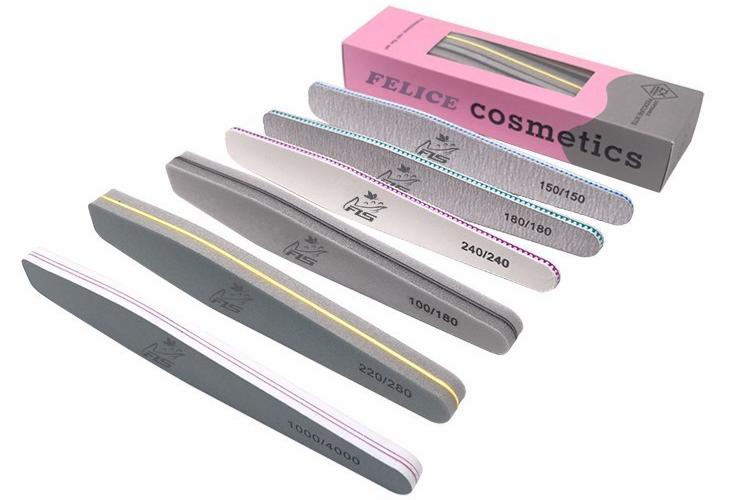
A typical coated-abrasive file may combine sandpaper, EVA, and a board. Other formats include wood, glass, metal, polishing, and sponge files. The purchase specification should identify each important nail file material rather than use a broad description such as “professional quality.” Inspect cut edges and, where appropriate, an agreed destructive sample to confirm that the core and cushioning layer match the approved sample.
A metal nail file or replaceable metal-board system needs a different checklist. For an online marketplace order, buyers should still request traceable material and surface specifications.
Check 2: Measure Flat and Nail File Cube Formats
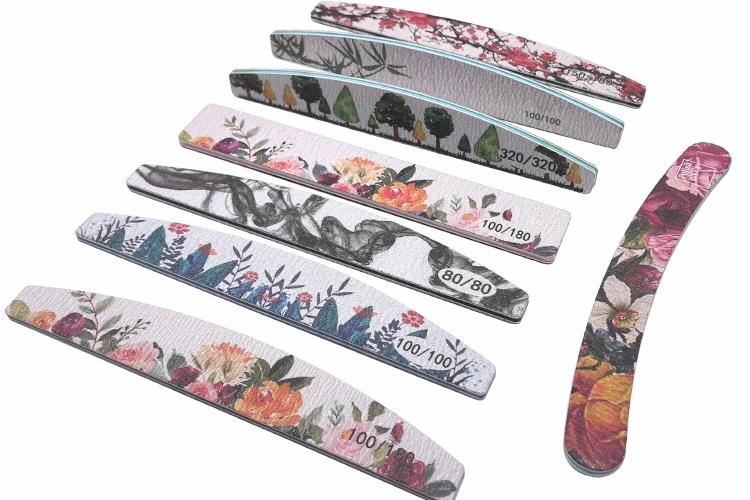
Record length, width, thickness, shape, and allowable flex. Straight, curved, half-moon, diamond, square, wave, mini, and block formats do not share one dimensional standard. A nail file cube also needs face alignment, corner condition, and equal side dimensions checked because a twisted block can create uneven contact.
Measure units from different packs against the drawing and approved sample. Define tolerances before production because no single limit fits every construction.
Are Nail File Numbers and Abrasive Surfaces Consistent?
Grit is both a functional specification and a labeling issue. The number printed on a file, sleeve, or carton must correspond to the actual side pairing supplied.
Check 3: Confirm the Grit Label and Side Pairing
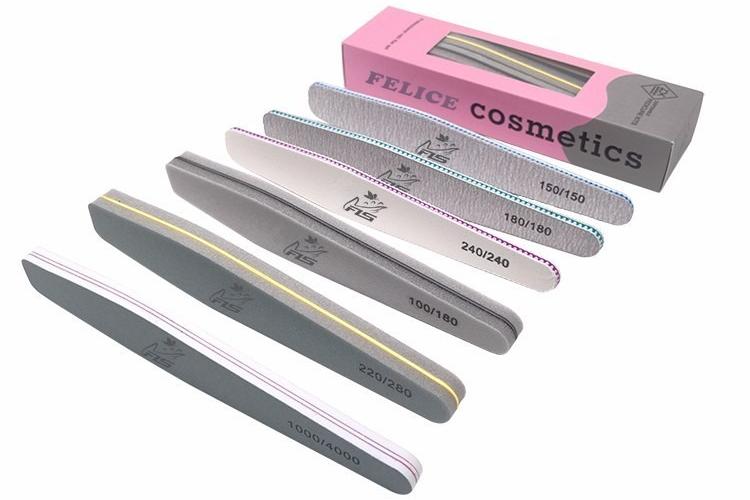
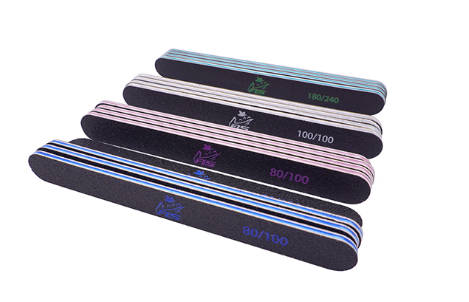
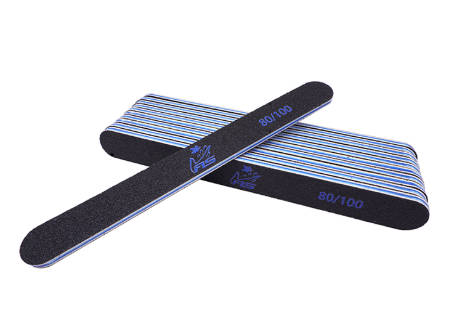
Lower nail file numbers normally identify a coarser abrasive, while higher numbers indicate a finer surface. Common coated-abrasive choices in the project specifications include 80, 100, 120, 150, 180, 240, and 320 grit. Buyers should verify each face separately, especially on combinations such as 100/180 or 180/240.
Compare filing action with an approved reference under one test method. Both sides and all pack labels should match the stated pairing.
Check 4: Inspect the Sandpaper Nail File Surface
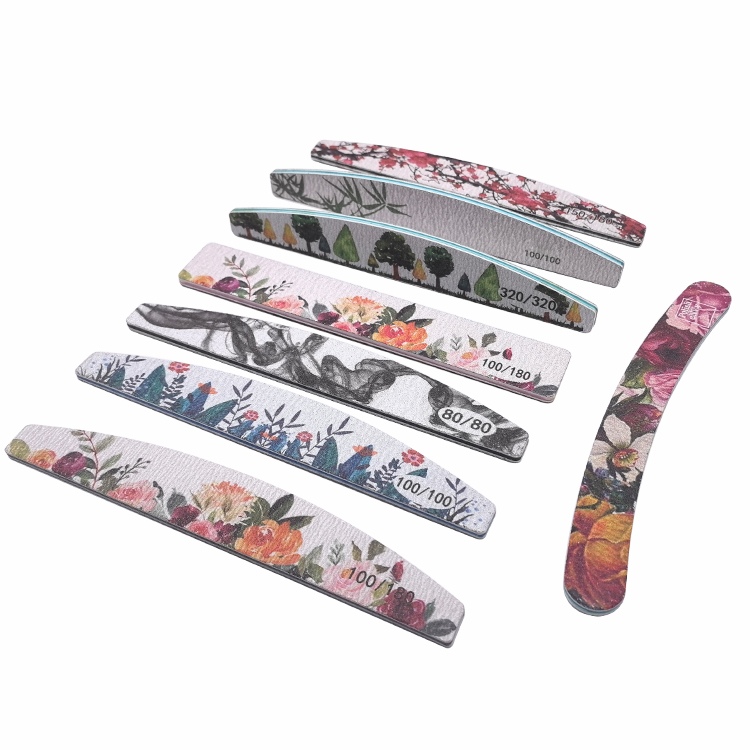
Hold each sampled sandpaper nail file under consistent lighting. Look for bare areas, uneven grain distribution, wrinkles, bubbles, edge lift, and contamination. Rub or file against an agreed test material to check for unusual shedding and rapid loss of cutting action. The purpose is not to demand a visually perfect decorative surface, but to identify variation that changes use or predicts early failure.
A defect concentrated in one carton may indicate packing damage; repetition across cartons suggests a wider issue.
Will a Nail File for Gel Nails Perform Consistently?
Performance approval must reproduce the intended service. A file selected for natural-edge finishing should not be judged by the same removal-speed expectation as a file intended for artificial material.
Check 5: Test the Best Nail File for Gel Removal Claim
The best nail file for gel removal is not defined by one grit number alone. Construction, abrasive consistency, operator pressure, removal stage, and the nail system all affect the result. Before approving a nail file for gel nails, use an agreed test procedure and compare removal rate, control, heat sensation, clogging, and finish with the approved sample.
Use trained operators and the same test duration for each sample. Record results, stop before reaching the natural nail, and limit product claims to the validated task.
Check 6: Examine Edges, Bonding and Recovery After Flexing
Inspect for exposed core edges, sharp burrs, lifted abrasive, split foam, permanent warping, or a surface that shifts under light pressure. Apply only the flex method agreed for that format. A rigid or metal-based file should not be forced through a bend test designed for a cushioned board.
Compare the handled sample with an unused unit on a flat reference. Write measurable bonding and recovery requirements into the approval sheet before production.
Are Printing, Packing and Lot Details Ready for Bulk Approval?
Functional conformity does not excuse incorrect private-label execution. The final two checks connect the physical file to the commercial order and the lot being released.
Check 7: Compare Logo, Color and Print Placement with the Master Sample
Use approved artwork, not a screen image, as the reference. Check logo orientation, print position, color family, surface coverage, and readability on several units. Confirm that printing has not covered a grit label or created a raised edge that changes use. For mixed colors or shapes, verify the assortment ratio stated in the order.
Check 8: Verify Quantity, Pack Configuration, Labels and Lot Records
Count units in sampled inner packs and confirm the number of packs per carton. Check labels for product name, model, grit pairing, color, and any buyer-required lot identification. Inspect shrink film, bags, or individual sleeves for damage and excessive compression.
Record which cartons were opened, which samples failed, and how the decision was made. Sampling quantity and acceptance limits should come from the buyer’s agreed inspection plan. They should not be replaced by an unsupported universal AQL value.
How Felice Beauty Supports a Verifiable Nail File Approval Process
At Felice beauty, we use product specifications and pre-production samples to help buyers align construction, grit, customization, and packing before a bulk order moves forward. Our products include several file and buffer formats, so we match the inspection sheet to the selected construction instead of applying one checklist blindly.
Use FLS-NF-001 as a Specification-Based Example
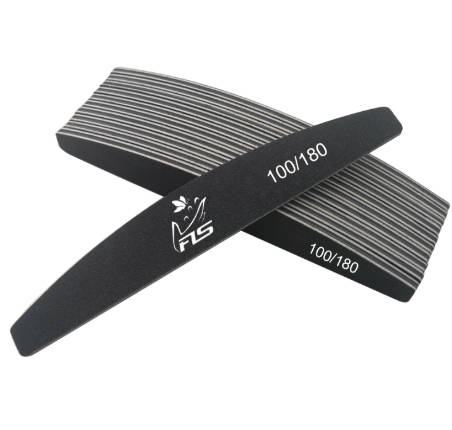
FLS-NF-001 is a zebra-grey file built with a 1.8 mm plastic board, EVA, and Japanese sandpaper. The verified product information lists two size formats, grit choices from 60 through 240, and stock pairings including 80/80, 100/100, 100/180, and 180/240. Packaging is listed as 25 pieces per pack, with logo and packaging customization supported.
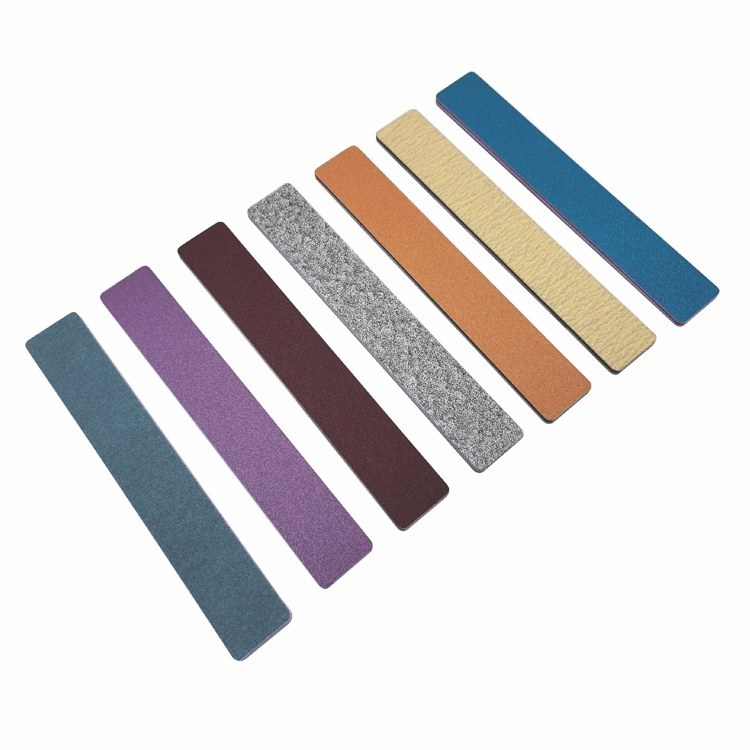
These fields give a buyer a concrete approval record: model, layer construction, dimensions, grit pairing, color, pack count, and artwork revision. They should not be generalized to every file in the range.
Approve the Sample and Custom Details Before Production
Felice beauty can provide a pre-production sample for quality checking before a bulk order. We recommend confirming shape, size, color, logo, grit labels, and packaging on that sample, then retaining an approved reference for shipment inspection. Felice beauty should also receive the buyer’s intended use and test method so our team can discuss an appropriate product direction without making an unsupported universal performance claim.
FAQ
Q: What do nail file numbers mean?
A: They usually describe abrasive grit. Lower numbers are coarser and remove material faster; higher numbers are finer. Always confirm the printed number, the actual side pairing, and performance against an approved reference.
Q: What should buyers approve for a gel-removal file?
A: Approve the construction, grit pairing, removal task, test method, acceptable surface wear, edge condition, and packing. A supplier should not call one file universally best for every gel system.
Q: Should a cube-format file be inspected differently from a flat file?
A: The core principles are the same, but a cube or block requires checks on every face, corner alignment, side dimensions, grit sequence, and resistance to twisting. Flat files require closer attention to longitudinal warping and exposed core edges.