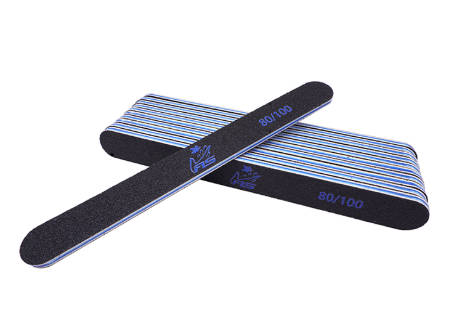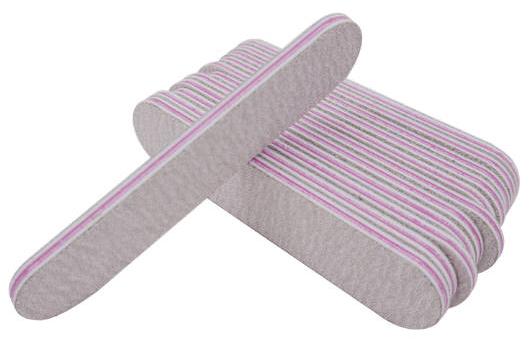
The right nail file is not simply the roughest, strongest, or most expensive option. A useful choice matches the abrasive surface, core, grit, shape, and flexibility to a defined job. After selection, controlled contact and suitable care determine whether the tool remains predictable. This guide explains those decisions in order, from reading construction and grit to recognizing when cleaning or replacement is appropriate.
Which Filing Tool Is Right for the Nail and the Task?
How Do Abrasive Surface, Core, and Flexibility Change Control?
A file is a system rather than one material. The abrasive removes material; the core provides rigidity or flex; foam or EVA can add cushioning. That is why nail file material should be evaluated as a combination. Bamboo nail files use a wood-based support, while an emery nail file usually combines an abrasive sheet with a board. Glass and metal formats create different feedback, and sponge-supported files conform more readily to curved working areas.
When comparing a nail file alternative, begin with the task. Ask whether the tool must shorten a free edge, refine an outline, smooth an enhancement, or finish a surface. A rigid profile may provide a clear line; a cushioned format may soften contact. Neither characteristic is automatically better.
What Do Grit Numbers Reveal About Cutting Speed and Finish?
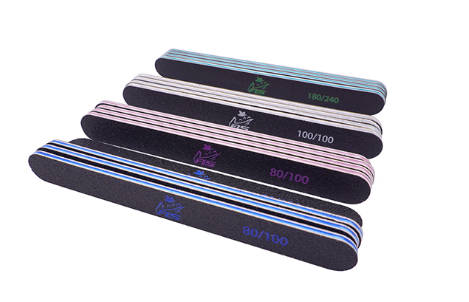
Nail file grit numbers run in the opposite direction from coarseness: a lower number describes a coarser abrasive, while a higher number describes a finer one. Available options include 80, 100, 120, 150, 180, 240, and 320. Those nail file numbers indicate relative cutting behavior, but do not replace a task specification.
The backing, abrasive quality, pressure, and condition of the surface also change the feel. Buyers should compare samples with the intended material and record which grit performs each stage. Users working on natural free edges should favor control over rapid removal and move finer if the surface catches or requires excessive pressure.
Shape and Flexibility Choices for Different Working Areas
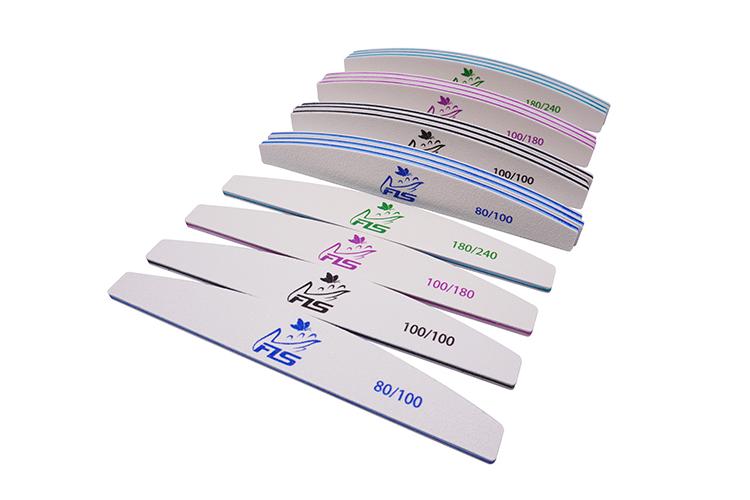
Straight profiles give a broad, predictable edge. Curved or half-moon formats can improve access around contours, while narrow or mini formats may suit kits and detailed work. Flexibility affects how much of the abrasive contacts the surface at once. Select shape and flex together: the best profile is the one that reaches the target area without forcing the hand into an unstable angle.
How Should You Use a File Without Losing Control?
What Position, Motion, and Pressure Produce a Predictable Edge?
Support the finger or enhancement so the working area does not move under pressure. Place the abrasive on the intended edge, keep the angle consistent, and use deliberate strokes. Avoid rapid sawing at one point. Controlled back-and-forth movement with a suitable surface is different from hurried scrubbing; the practical goal is limited pressure, even contact, and frequent inspection.
If the tool stops cutting, do not automatically press harder. Debris, wear, or an unsuitable grit may be responsible. Pause and check the abrasive. A predictable tool should remove material at a rate the user can observe and stop.
A Two-Stage Sequence from Shaping to Edge Refinement
Use the shaping stage to establish length and outline. Do not try to create the final smoothness while the shape is still changing. Once the form is balanced, use a finer stage to remove minor roughness and define the finish. View the edge from more than one angle. Stop when the line is even and the edge no longer catches; more passes are not proof of a better result.
When Should a File Be Cleaned, Stored, or Replaced?
Are Washable Nail Files Compatible with Every Cleaning Method?
No. Washable nail files must be identified by their exact construction. Selected plastic-board, EVA, sponge, and sandpaper formats are washable, but the same claim does not extend to every bonded board, wood core, or printed product. Confirm the instructions for the exact model.
Where washing is approved, remove residue using the specified method, dry the tool fully, and protect the abrasive during storage. Cleanability is only one part of hygiene planning. A salon or distributor must still define user assignment, storage, inspection, and disposal rules.
Which Wear Signs Matter More Than a Fixed Replacement Date?
Replacement should follow condition and performance. Look for smooth patches, uneven cutting, persistent clogging, lifting abrasive, a warped or split core, damaged edges, or corrosion on a metal surface. A change that makes the user add pressure is especially important. Calendar dates alone cannot account for differences in frequency, pressure, material, and cleaning.
Service Life, Replaceability, and Environmental Claims
The phrase eco friendly nail file needs a defined basis. Material choice may matter, but so can usable life, packaging, compatible cleaning, refill systems, and local disposal routes. A replaceable abrasive system may retain a durable handle while changing the working surface; a disposable board may support a different hygiene policy. Compare the whole workflow instead of treating “reusable” or “natural” as an automatic environmental conclusion.
How Does Felice beauty Help Buyers Specify a Branded Filing Tool?
Which Grit, Shape, Thickness, and Abrasive Details Need Definition?
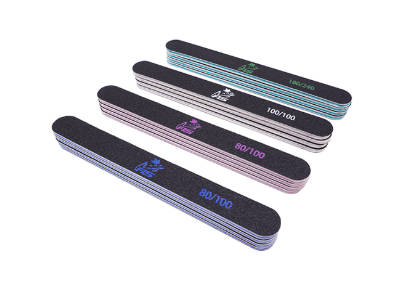
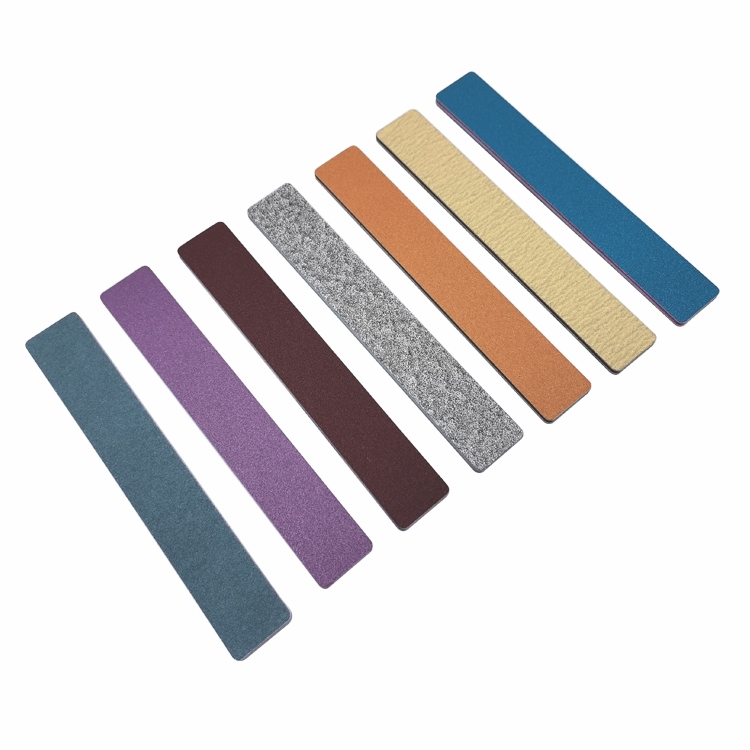
A sourcing brief should state the job first, then identify grit or dual-grit pairing, abrasive type, board construction, thickness, cushioning, dimensions, and shape. At Felice beauty, we offer files using plastic board, EVA, sandpaper, Japanese sandpaper, and sponge-supported structures. Available configurations also cover straight and shaped formats, several colors, and grit combinations including 100/180 and 180/240.
Felice beauty can use those variables as a starting point for a custom nail file, but the final combination should follow the buyer’s approved task and sample. A product family does not mean every option can be combined without confirmation.
Sample Checks, Logo Placement, and Packaging Before Production
Felice beauty supports discussions covering logo, printed design, color, size, shape, labels, and packaging for eligible formats. The sample review should examine abrasive feel, grit identification, board response, edge finish, print clarity, logo position, pack count, and protection of the working surface. Written approval of those details gives production and incoming inspection the same reference.
FAQ
Q: Do Metal Nail Files Wear Out?
A: Yes. Metal tools can lose effective abrasion, deform, corrode, or become damaged. Assess the working surface and the pressure needed, then replace the tool when performance is no longer even or predictable.
Q: Can Every Nail File Be Washed?
A: No. Washability depends on the abrasive, adhesive, core, coating, printing, and intended product instructions. Verify the exact construction before introducing water or disinfecting procedures.
Q: Which Emery Board or File Is Suitable for Natural Nails?
A: Choose a fine, controllable surface that matches the nail’s condition and the limited amount of material being removed. Test light pressure first and move finer if the edge catches or becomes rough.
Q: When Should an Emery Board or File Be Replaced?
A: Replace the tool when cleaning no longer restores even cutting, the abrasive lifts or smooths out, the core changes shape, or the user must apply more pressure. Hygiene policy may require earlier disposal.