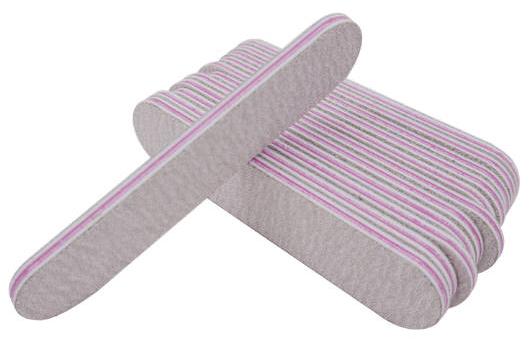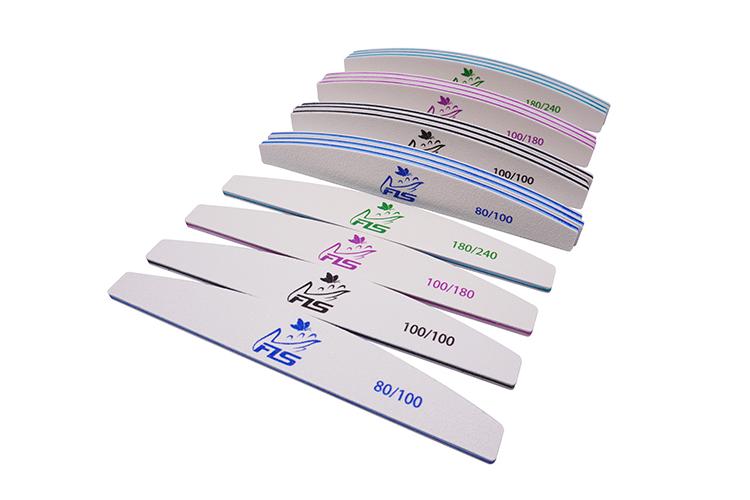
A practical nail file set is not the pack with the highest item count. It is the smallest coordinated group that covers the jobs in a real manicure: setting length and outline, refining the free edge, finishing a surface when appropriate, and handling any defined specialty service. Start with those roles, then assign construction, grit, care, and replacement rules.
Which Manicure Jobs Must a Practical Nail File Set Cover?
How Many Distinct Jobs Are Hidden Behind ‘Filing’?
“Filing” can describe several different actions. Shortening removes length; shaping establishes the outline; refining smooths the free edge; buffing or polishing changes a broader surface. Enhancement work may require another removal rate or profile. Treating all these actions as one job encourages users to push one tool beyond its intended area. A useful nail file set identifies each stage before counting files.
Core Roles First, Optional Tools Only When a Service Requires Them
Begin with a shaping role, a refining role, and a surface-finishing role if the manicure includes that step. Add a specialty tool only when it solves a defined need, such as narrow access, enhancement shaping, replaceable abrasives, or a particular hygiene workflow. A nail file alternative earns space by adding function, not by using a different material or color. This role-first test keeps the kit compact.
Which Tools Belong in an Essential Manicure Nail File Set?
Which File Should Set Length and the Main Outline?
The shaping file handles the largest planned change. Its abrasive and support should remove material at a controllable rate without flexing unpredictably. For a natural-nail kit, that usually means prioritizing a manageable finish over aggressive speed. For an enhancement service, the file may need a different grit or stiffness.
Why Does Edge Refinement Need a Finer Second File?
A separate refining surface prevents the shaping stage from continuing after the outline is correct. The finer file removes minor roughness and helps the technician check the final line. A dual-grit format may place shaping and refining on opposite sides, but those sides still represent two roles.
Does the Set Need a Buffer or Polisher for Surface Finishing?
A buffer is not just another shaping file. It is intended for a broader contact area and a different finish objective. Include one only when the service requires controlled smoothing or polishing. The working surface must suit the nail or enhancement system, and the process needs its own stop point. Removing length and finishing a surface should never be treated as interchangeable tasks.
Specialty Files for Precision, Enhancements, or Replaceable Systems
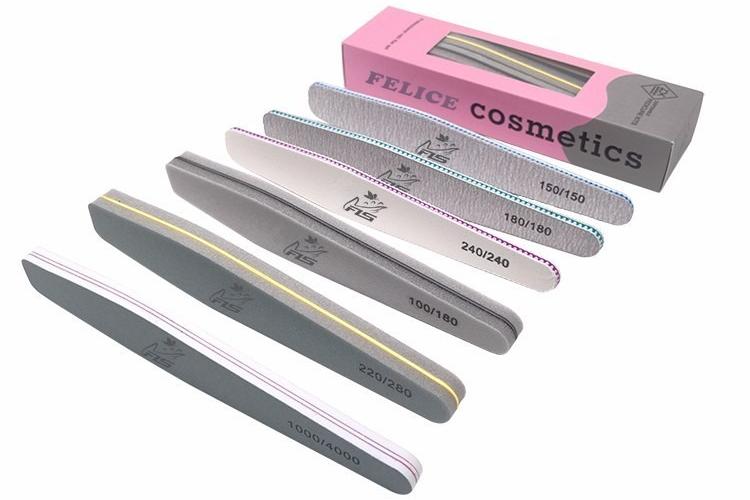
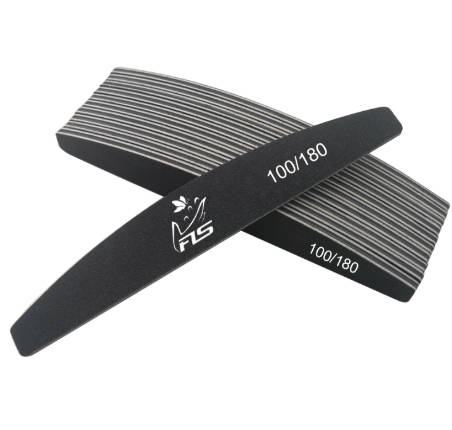
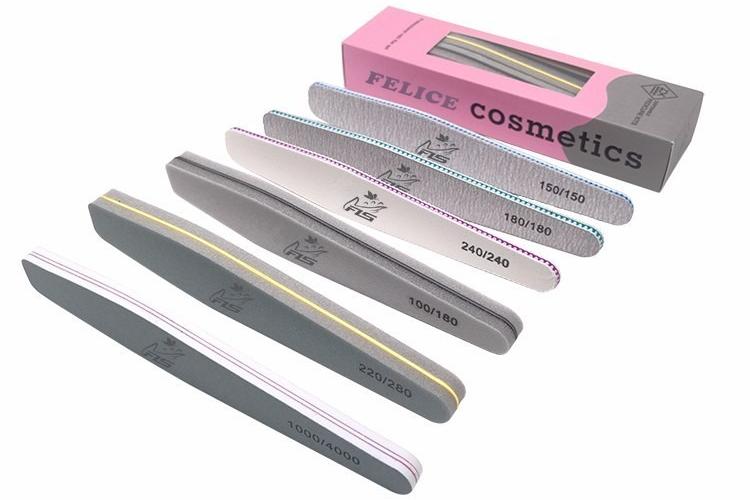
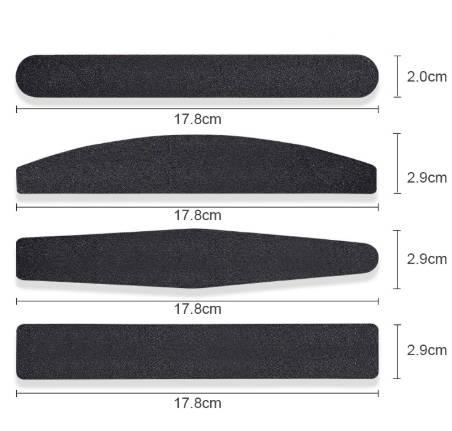
Specialty choices may include narrow profiles, half-moon shapes, glass or metal formats, sponge-supported files, and handles with replaceable abrasive sheets. Each option should be tied to access, material, hygiene, or refill planning. If the core tools already perform the job safely and efficiently, another file only adds stock complexity.
How Should Material and Grit Be Matched to Each Tool Role?
What Does Nail File Material Change About Feel, Flexibility, and Care?
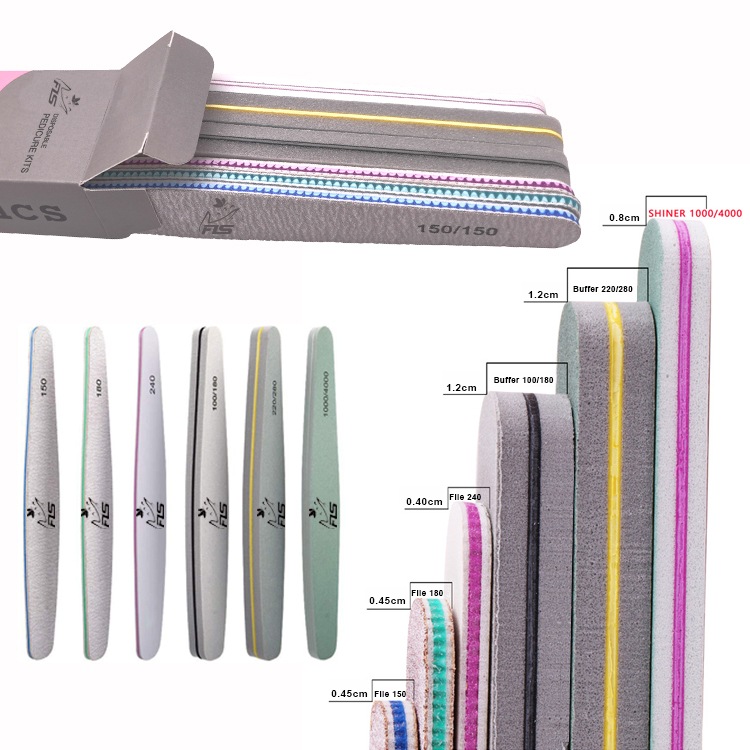
A file combines an abrasive with a support. Bamboo nail files use a wood-based core, while an emery nail file generally places abrasive on a board. Glass, metal, sandpaper, EVA-backed, and sponge-supported constructions differ in stiffness, cushioning, edge response, and cleaning compatibility. The best nail file material is therefore role-specific: a rigid shaper, cushioned refiner, and surface buffer may require different structures.
How Do Nail File Numbers Control Removal Rate and Finish?
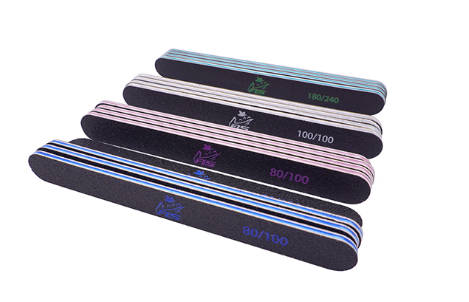
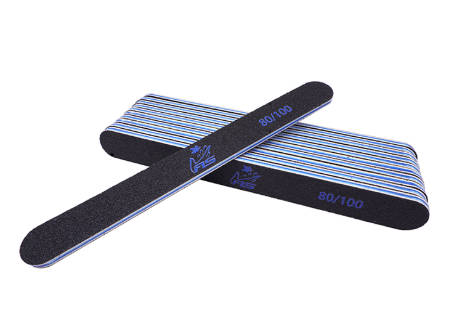
Lower grit numbers are coarser; higher numbers are finer. Available options run from 80 through 320, with common paired configurations such as 100/180 and 180/240. Those nail file numbers help distinguish shaping from refinement, but the backing and abrasive quality also affect feel. Do not fill a set with every available grit. Choose the few stages that create a clear progression for the intended service.
A Role-by-Role Material and Grit Pairing Check
For each position in the nail file set, write down five items: task, working area, construction, grit, and expected finish. Then look for gaps and duplicates. If two files have the same task and finish, one may be unnecessary. If a tool is expected to shape, refine, and polish, the role may be too broad. This simple table also gives buyers a usable sampling brief.
When Should the Set Be Cleaned, Stored, or Replaced?
Which Washable Nail Files Suit the Intended Hygiene Process?
In a professional nail file set, only place washable nail files in a water-based cleaning workflow when the exact construction is verified as compatible. Selected plastic-board, EVA, sponge, and sandpaper formats are washable, but compatibility remains model-specific. The set plan should state how residue is removed, how tools are dried, whether files are assigned to individuals, and how clean tools are separated in storage.
What Wear Signs Show That a File Is No Longer Predictable?
Inspect the abrasive for smooth areas, clogging, lifting, or uneven cutting. Check the core for bending, separation, cracks, or damaged edges. A metal format also needs inspection for deformation, surface damage, declining abrasion, and corrosion. Replace any tool that requires extra pressure or produces inconsistent results. The maintenance plan should keep a worn tool from returning to the active set.
Service Life, Replaceability, and the Eco Friendly Nail File Claim
An eco friendly nail file claim should identify what is improved: material choice, useful life, reduced packaging, cleaning compatibility, or a replaceable working surface. A refill system can retain a durable handle, while a disposable board can serve a strict single-use policy. Neither format is automatically the environmental winner. Compare waste, service life, hygiene requirements, and local disposal for the actual program.
How Does Felice beauty Build a Custom Nail File Set Around Real Jobs?
Which Grit, Shape, Thickness, and Color Details Need Definition?
At Felice beauty, we can discuss a role-based combination of files and buffers using plastic-board, EVA, sandpaper, Japanese sandpaper, and sponge-supported formats. Buyers can define grit or dual-grit pairing, straight or shaped profiles, board thickness, dimensions, cushioning, abrasive color, and surface color for each role. A custom nail file should enter the specification only after the intended task and finish are written.
Logo, Packaging, and Sample Approval as One Set Specification
At Felice beauty, we support eligible logo, printed design, label, size, shape, color, and packaging discussions. A coordinated sample review should check every role together: grit identification, abrasive feel, board response, edge finish, print consistency, pack count, and protection of working surfaces. We can provide a pre-production sample for review before bulk approval. One set specification prevents individual files from being approved as unrelated promotional pieces.
FAQ
Q: How Many Files Should a Basic Nail File Set Include?
A: Count roles, not pieces. A basic manicure may need a shaper, a refiner, and a buffer if surface finishing is part of the service. A dual-grit tool may combine two roles. Add specialty files only for defined work.
Q: Does a Manicure Nail File Set Need Both a File and a Buffer?
A: It does when the service includes both edge shaping and surface finishing. The file changes length or outline; the buffer addresses a broader surface. If no surface step is required, a buffer should not be added merely to increase the item count.
Q: When Should a Professional Set Include Duplicate Nail Files?
A: Duplicates can support uninterrupted work while compatible tools are being cleaned, individual assignment, or separate service stations. The quantity should follow client flow, hygiene policy, replacement lead time, and the actual role of each tool.