Choosing a nail file grit is a commercial decision, not just a technical one. A salon needs predictable filing across services, while a beauty brand needs a clear specification that can be reproduced in samples, packaging and repeat orders. The right number depends on the material being filed, the stage of work, the file construction and the operator’s method. This guide explains nail file grits in a B2B context so buyers can build a useful assortment without turning one grit into a universal promise.
Why Does Grit Matter in a B2B Service or Product Line?
What Does a Grit Number Actually Describe?
In simple terms, grit describes the relative coarseness of an abrasive surface. Within a stated range, a lower number generally has a coarser cutting action and a higher number a finer action. The practical meaning of the number therefore depends on the range being compared. A number is not a quality score, a safety certification or a guarantee of filing speed.
For nail file grits explained in a purchasing brief, record the number for each side, the abrasive type and the material underneath it.
How Should Businesses Connect Grit to the Service Workflow?
Map the file to a task: material reduction, shaping, edge refinement or finishing. A salon may need a coarser surface for a controlled removal stage and a finer surface for the final edge. A retail kit may need a simpler pairing that customers can understand. A professional buyer should also define the substrate, expected operator pressure and acceptable finish before approving a sample.
How Can You Read an Explained Nail File Grit Chart?
What Is the Roughest Grit in a Typical Business Range?
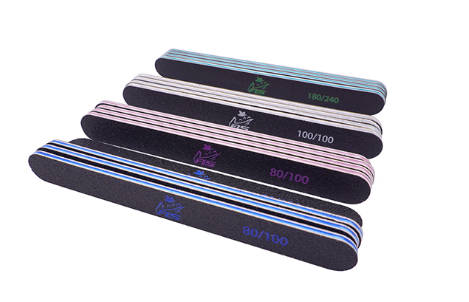
The roughest number is the lowest number in the particular range being discussed, not an absolute number shared by every supplier. In the documented project range, 80 is coarser than 100, 180 and 240. That does not mean an 80-grit file is automatically the strongest or best choice. Board stiffness, abrasive quality, contact area and the material being filed all affect the result.
So, what is the strongest nail file grit? There is no single answer based on the number alone. “Strongest” may refer to cutting action, board durability or resistance to wear, and those are different specifications.
How Do 80, 100, 180, 240 and 320 Grits Map to Tasks?
Use an explained nail file grit chart as a starting point. Coarser numbers are normally evaluated for heavier reduction or shaping, mid-range numbers for controlled shaping, and finer numbers for refining an edge. A 320 surface may suit a finer step in some programs, but it should not be assigned to every service without testing.
Why Is a Fingernail File Grit Chart Not a Substitute for Testing?
Two files with the same printed number can feel different when their abrasive sheet, board thickness, EVA layer, shape or surface quality changes. The operator’s pressure and filing angle also alter the experience. For that reason, a buyer should compare cutting control, shedding, edge finish and wear against an approved reference. Record the test method instead of relying on a universal claim.
Which Grit Should You Choose for Gel Polish, Natural Nails and Retail Kits?
What Is the Best Nail File Grit to Remove Gel Polish?
The best nail file grit to remove gel polish depends on the gel system, the removal stage, the file construction and the operator. A responsible supplier should not call one number universally best. Buyers should test the proposed grit on the intended product, define how much material is removed in the test period, and stop before the natural nail is affected. A finer surface may be more suitable for controlled finishing, while a coarser surface may be evaluated for an earlier reduction step. The final choice belongs in the service specification.
When Should a Salon or Brand Offer Dual-Grit Nail Files?
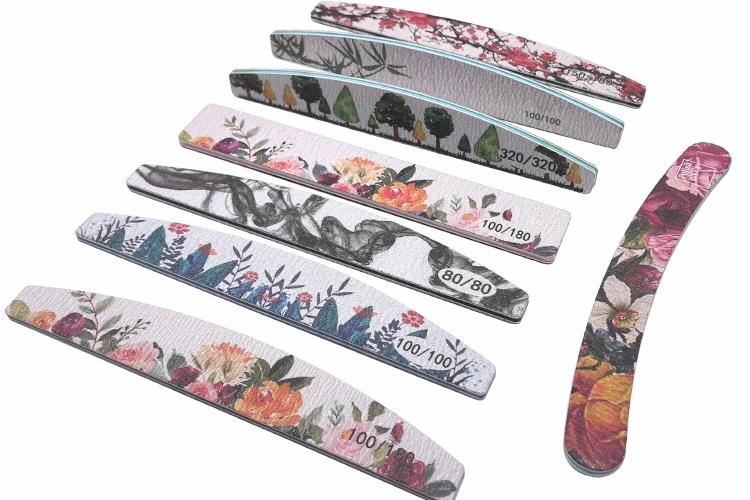
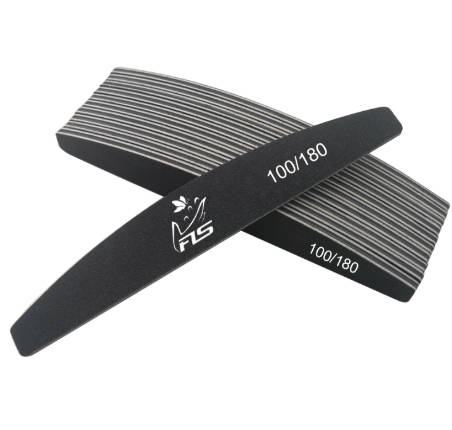
A dual-grit format can make a workflow easier to explain: one side supports an earlier shaping or reduction stage and the other supports refinement. There is rising interest in the 100/180 grit pairing, and verified product records confirm that specific models already feature common pairings such as 100/180 and 180/240.
How Should Retail Kits Present Grit Without Confusing Customers?
List the grit, the side pairing and the intended task together. “Fine finishing side” is more useful to a customer than a number alone, while professional buyers still need the exact number for replenishment. Packaging should identify the model, dimensions and surface pairing. Avoid presenting a lower number as “better”; explain that it is coarser and may be intended for a different stage.
What Should You Verify Before Ordering Nail Files in Bulk?
Which Material and Board Details Affect Grit Performance?
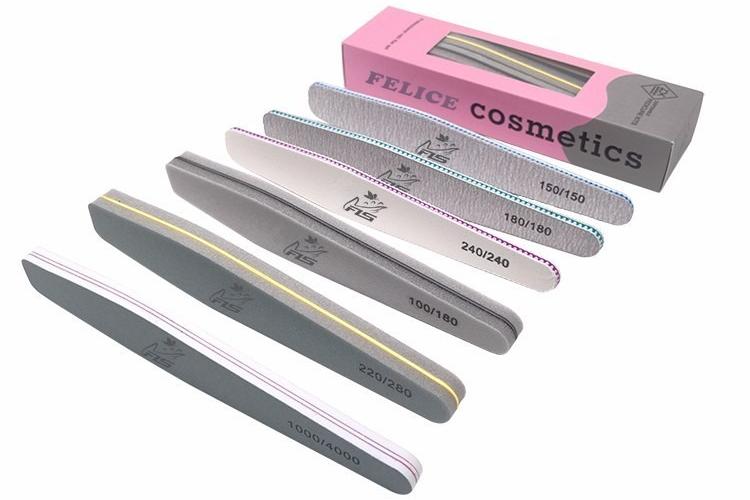
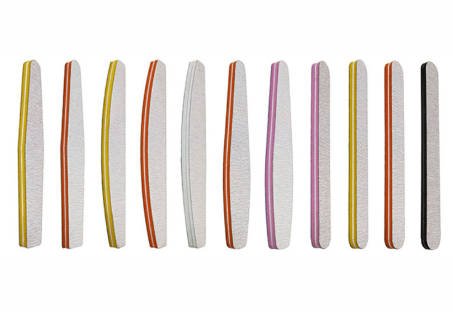
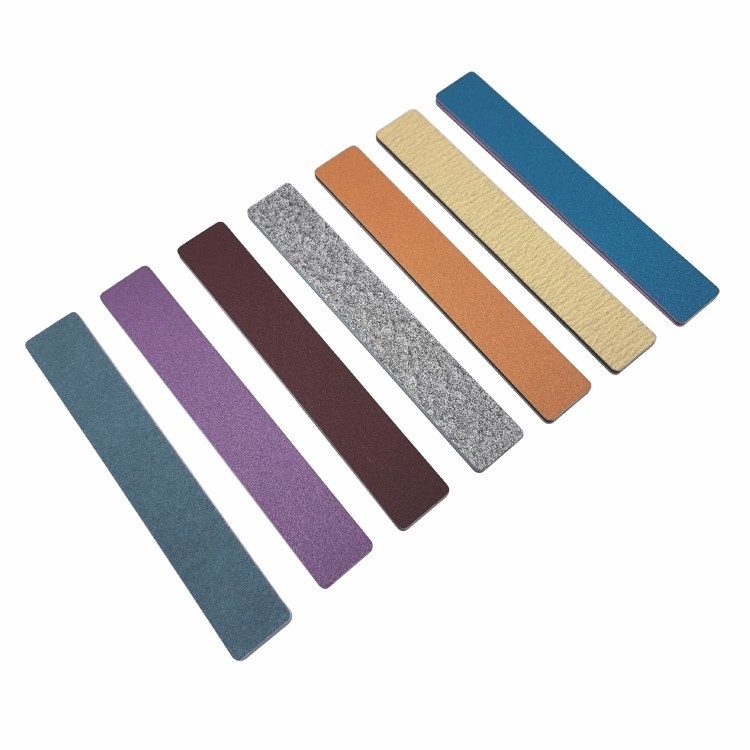
Write the full construction into the request for quotation: abrasive type, board or core, EVA or sponge layer, thickness, dimensions, shape and grit on each side. Project records distinguish sandpaper, sponge, glass, metal and polishing formats, and they show that board thickness and abrasive grade vary by model. A grit number without those fields leaves too much room for substitution.
What Should a Pre-Production Sample Confirm?
Approve the grit pairing, dimensions, edge condition, surface appearance, print, packaging and test method. Compare the sample with the specification and retain the reference for shipment inspection. If the file is intended for gel work, record the substrate and operator method.
How Can Buyers Avoid Treating One Model as the Whole Range?
Recheck every model. Verified records show different board thicknesses, grit ranges, dimensions, stock pairings and packaging. A specification for one model should not be copied to another without confirmation.
How Can Felice beauty Support a Business-Specific Grit Program?
Which Felice beauty Nail File Details Can Buyers Specify?
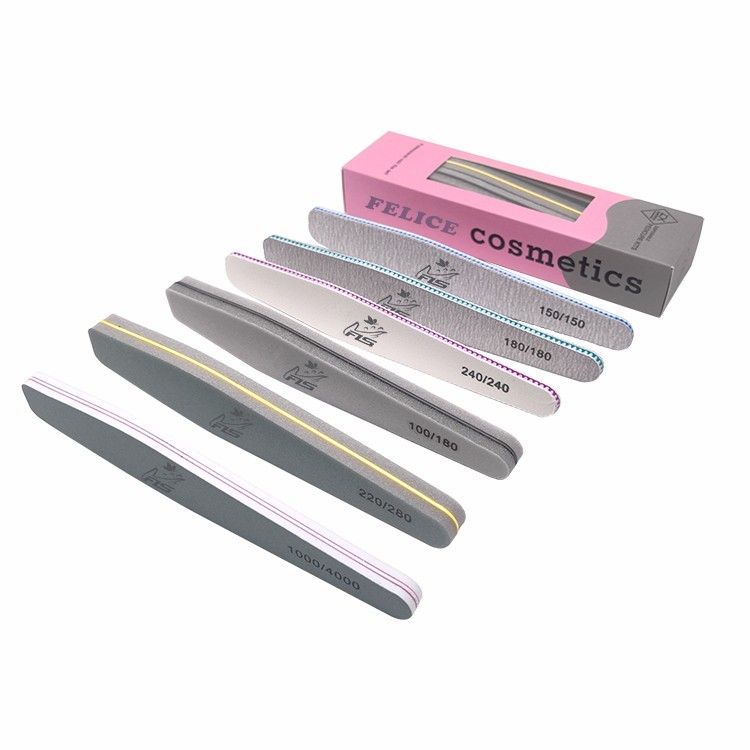
At Felice beauty, we can discuss a business brief around grit, construction, dimensions, shape, logo and packaging. FLS-NF-001 is recorded with a 1.8 mm plastic board, EVA and Japanese sandpaper, with listed grit choices from 60 through 240 and stock pairings including 80/80, 100/100, 100/180 and 180/240. These details are model-specific and should be reconfirmed before production.
How Do We Use Samples to Confirm the Right Grit?
We use a pre-production sample as the point for comparison before a bulk order. Our team can review the intended service, grit pairing, material stack, print and packaging with the buyer, while the buyer performs the agreed practical test. Our products should be selected by documented use and sample results, not by a number taken out of context.
FAQ
Q: What is the strongest nail file grit?
A: No grit number alone proves strength. A lower number is generally coarser within a stated range, but board construction, abrasive quality and the task determine cutting action and durability.
Q: What is the roughest nail file grit?
A: It is the lowest number in the range being compared. In the documented 80-320 range, 80 is the coarsest listed number. Confirm the actual surface and model before using that description commercially.
Q: What is the best nail file grit to remove gel polish?
A: There is no universal answer. Test the proposed grit on the intended gel system, define the removal stage and approve the result against a retained sample before ordering in bulk.