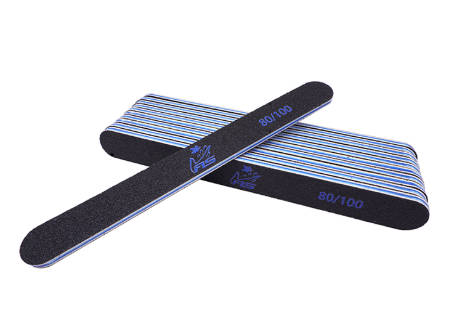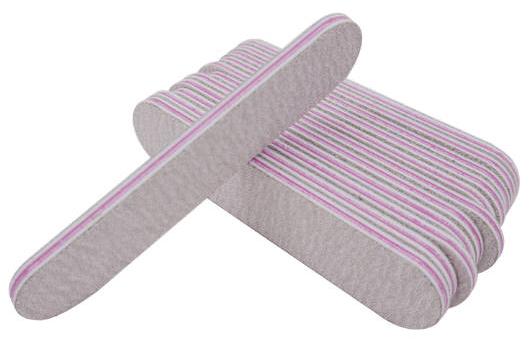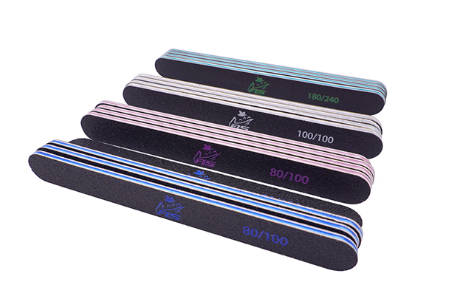
The emery board vs nail file decision matters because natural nails can split, peel, or develop rough edges when the abrasive is too coarse, or the filing motion is too aggressive. An emery board is affordable and familiar, while “nail file” can describe several materials and performance levels. The best option depends on nail condition, grit, hygiene needs, and the amount of shaping required.
Are Emery Boards the Same as Nail Files?
What Is the Difference Between Emery Board and Nail File Products?
The difference between emery board and nail file terminology is mainly in the category scope. An emery board normally uses abrasive material bonded to a flexible board. A nail file may use that construction or a solid filing surface. For natural nails, flexibility can feel forgiving, but abrasive quality and edge finishing still matter.

What Are Emery Boards Made Of?
Customers often ask what emery boards are made of. To understand this, they need to look past the outside color. A standard build mixes a few key parts. These include a coated abrasive and EVA cushioning. It also uses strong adhesive alongside a plastic or paper-based core. A sandpaper nail file relies on a very similar layered setup. People frequently make an emery board vs sandpaper comparison. In this case, sandpaper just means the rough sheet. On the other hand, the complete board features much more. It contains the solid backing and the specific shape. It also involves the bonding materials and the final edge treatment.
How Do Emery Board Grit Numbers Affect Natural Nails?
Grit controls how quickly a file removes material. Lower numbers feel coarser and cut faster; higher numbers feel finer and leave a smoother edge. Natural nails generally need a more controlled surface than thick enhancements.
What Does 100/180 Mean on an Emery Board?
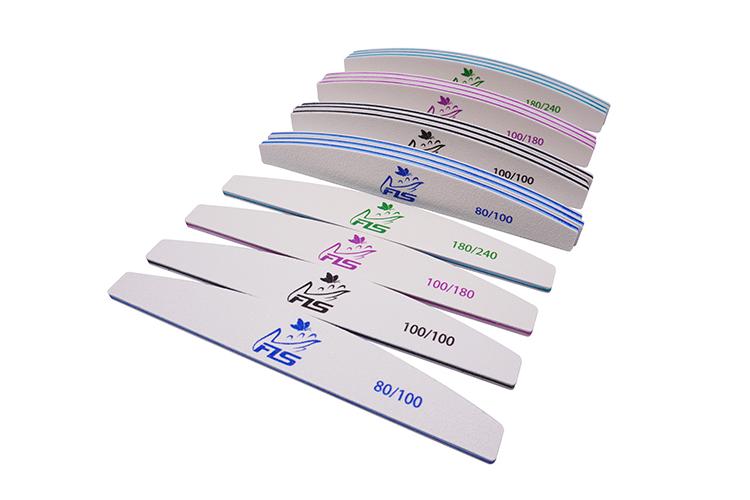
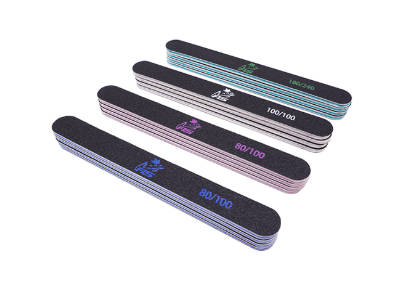
The marking 100/180 identifies two abrasive faces. The 100-grit side is coarser, while the 180-grit side is finer. Project product specifications include options such as 60, 80, 100, 120, 150, 180, 240, and 320 grit. A buyer should confirm which face carries each grade and whether the production sample matches the approved cutting feel.
Can the Wrong Grit Damage Natural Nails?
A coarse surface, heavy pressure, or repeated back-and-forth sawing can leave the free edge frayed. Fine cracks may then grow into peeling or splitting. A nail file should meet the edge at a controlled angle, and filing should stop once the desired shape is reached.
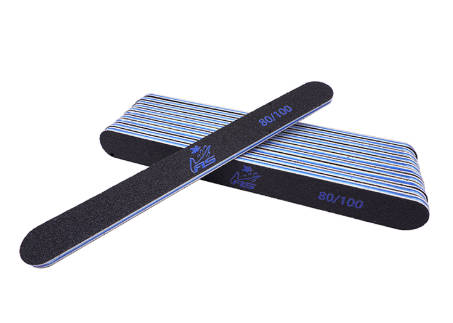
How Should You Use, Clean, and Replace an Emery Board?
Correct handling protects the nail and extends the useful product life. Cleaning advice must match the construction because a porous board and a washable file cannot share one care method.
How to Use an Emery Board on Natural Nails
Anyone learning how to use an emery board should begin with clean, dry nails. Choose a suitable grit, support the fingertip, and file the free edge with light, deliberate strokes. Work from the side toward the center rather than grinding rapidly across the entire edge. Check symmetry after a few strokes and avoid filing deeply into the sidewall.
How to Clean Emery Board Nail File Products
The search phrase how to clean emery board nail file products has no universal answer. Conventional porous boards can retain moisture and residue, so many salons assign each board to one client or dispose of the board according to policy. Only supplier-verified washable constructions should receive a compatible cleaning treatment, followed by complete drying.
Replace a board when abrasive areas become smooth, particles shed heavily, layers lift, edges fray, or filing requires extra pressure. A worn board can encourage rough handling and inconsistent results.
Buyers can compare shapes and cushioning in the wholesale nail files and buffers range before specifying a natural-nail assortment.
Why Choose Felice Beauty Emery Boards and Nail Files?
At Felice beauty, we develop nail-care tools for B2B buyers, salons, distributors, retail programs, and private-label projects. We introduce our products after the use case, grit, construction, and packaging requirements are clear.
Which Emery Board Options Do We Offer?
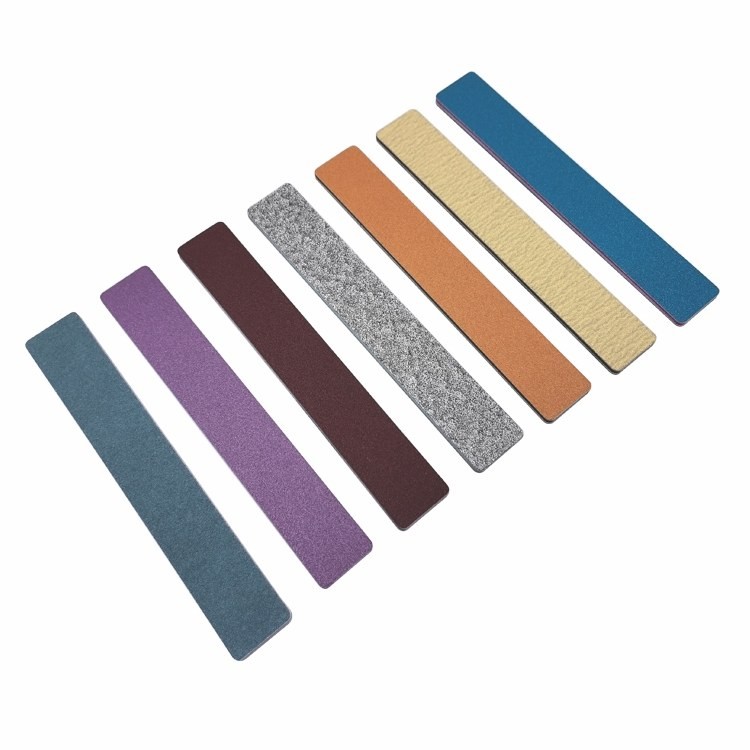
Our products include coated-abrasive files with plastic board, EVA, sponge, emery, and sandpaper structures. We support straight, curved, half-moon, diamond, square, wave, and mini shapes across relevant models. Selected options cover coarse through fine grit grades, multiple abrasive colors, custom artwork, logo printing, and tailored packaging.
We encourage buyers to approve a physical sample for surface feel, dimensions, grit pairing, print position, and edge finishing before bulk production.
How Do We Support Natural-Nail Product Programs?
We can help buyers separate natural-nail files from more aggressive enhancement files through clear grit codes, packaging copy, and assortment planning. Our Felice beauty product range also supports coordinated sourcing of buffers and related manicure tools.
For an accurate quotation, send us the target channel, annual quantity, size, shape, board thickness, grit combination, abrasive color, logo method, inner packing, and quality standard. We can then confirm suitable options and current order requirements.
FAQ
Q: Is an emery board or nail file better for natural nails?
A: A fine, consistent abrasive used with light pressure is more important than the product name. Choose a grit intended for natural nails and replace any worn or damaged file.
Q: What grit nail file should I use on natural nails?
A: Finer grades are generally preferred for routine edge refinement. Coarse grades remove material faster and require greater care. Follow the product instructions and nail condition.
Q: Can you use an emery board on weak or peeling nails?
A: Use a fine surface with minimal pressure and avoid repeated filing over fragile areas. Severely peeling, painful, or damaged nails may need recovery time before further abrasion.