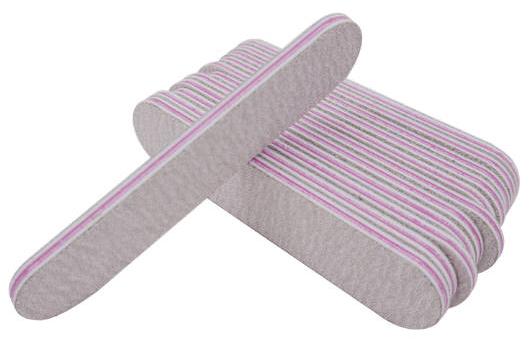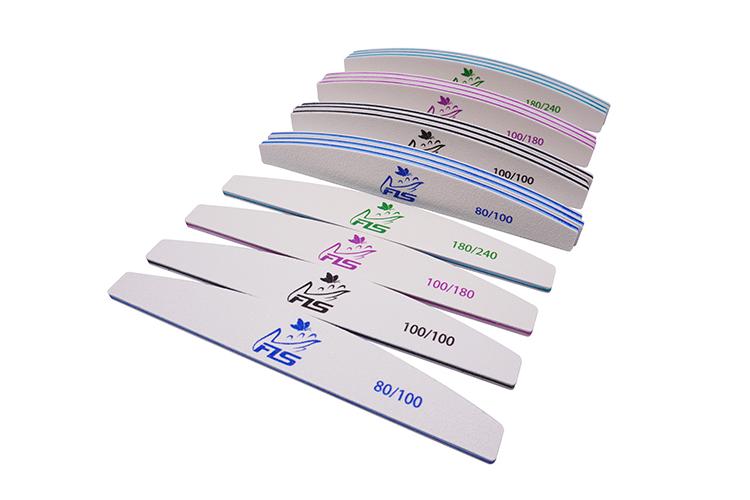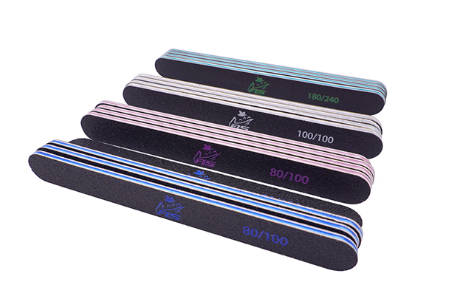
A 100/180 nail file configuration combines two abrasive levels in one tool. The 100 side is coarser than the 180 side, but the correct choice depends on the service step, nail material, pressure and technician process. For salons and wholesale buyers, the important question is not simply which side is stronger. The better question is how the two sides should be labeled, tested and assigned to a repeatable workflow.
What Do the Numbers on Nail Files Mean?
How Do Nail File Grit Numbers Work in Practice?
The numbers on nail files describe the relative coarseness of the abrasive surface. In the documented range, lower numbers such as 80 or 100 are coarser, while higher numbers such as 180, 240 or 320 are finer. Therefore, in practical nail-file grit terms, 100 is rougher than 180.
A grit number is not a complete usage instruction. The same number may feel different if the abrasive material, backing, pressure or file shape changes. Buyers should compare a physical sample and record the approved side orientation before placing a bulk order. Clear printing or color coding can reduce confusion at the workstation.
Why Is 100/180 a Common Dual-Grit Combination?
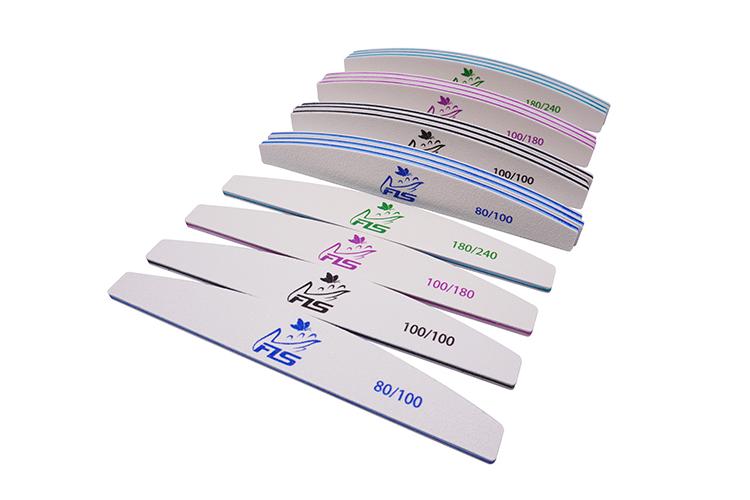
The commercial value of nail files 100/180 comes from combining a coarser side with a finer side. The 100 side may support earlier shaping steps, while the 180 side can support more controlled refinement. The pairing gives a salon one compact tool for two stages, but the actual workflow should be confirmed by trained users.
Product records include 100/180 configurations in several sandpaper and sponge formats. Some documented files use a plastic board with EVA and sandpaper, while a mini buffer record combines sponge, EVA and emery. Buyers should confirm whether both sides have the same backing feel and whether the grit marking remains readable after handling.
Which Side Should Be Used for Acrylic, Gel and Natural Nails?
How Can the 100-Grit Side Be Used in Structured-Nail Work?
The 100-grit side is the coarser side of a 100/180 file. In a structured-nail workflow, a technician may consider the coarser surface when more shaping is required, but the choice should be controlled by the material thickness, product condition and amount of material that must be removed.
Acrylic and cured gel can respond differently to pressure and filing speed, so a buyer should not describe 100 grit as universally suitable for every enhancement. A service protocol can specify where the 100 side starts, how much pressure is allowed and when the technician changes sides. Sample testing is especially important when a file will be used across several nail systems.
When Is the 180-Grit Side More Appropriate for Refining?
The 180-grit side is finer than the 100-grit side. It can be selected when a service moves from broad shaping to edge refinement or surface control. For natural nails, the technician should consider nail thickness and condition before choosing a side, because a grit number alone cannot determine the correct pressure.
A practical salon system can mark the 100 side with a clear label and reserve the 180 side for later refinement. This simple sequence makes different nail files and uses easier to teach and audit. It also helps buyers evaluate whether the chosen nail file numbers are meaningful in daily work rather than only attractive on a specification sheet.
How Do Different Nail Files and Uses Affect Buying Decisions?
Which Materials and Shapes Should a Buyer Compare?
Different nail files and uses require different construction decisions. A sandpaper nail file with a plastic board and EVA may provide a familiar flat profile, while a sponge-supported format can offer a different level of cushioning. The relevant nail file material should be checked alongside grit, dimensions and edge treatment.
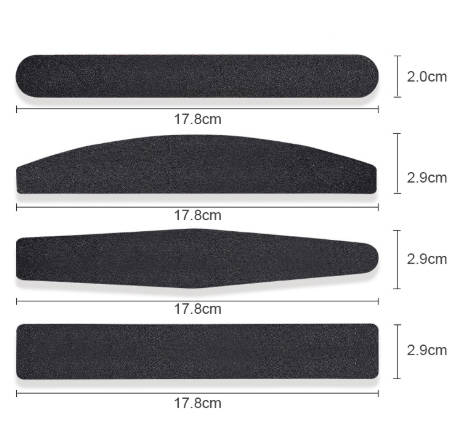
Shape also matters. Straight, curved, half-moon, diamond, square, wave and mini formats are documented options. A full-size straight file may suit a standard salon station, while a compact shape may support a kit or promotional pack. Buyers should compare the complete product specification instead of ranking one material as universally best.
Should Salons Select Single–Use Nail Files for Every Client?
Single-use nail files may be appropriate when a salon policy assigns one file to one client or one service. That policy should be based on the file construction and the salon’s hygiene procedure. Not every nail file should automatically be described as disposable, and not every washable surface should be treated as reusable without confirmation.
Some documented Japanese sandpaper products are described as waterproof and washable. A buyer should request confirmation for the exact model, then define cleaning, storage and replacement instructions. If a product is intended for single-use distribution, packaging and labeling should make the policy clear to staff and customers.
How Can Personalized Nail Files and Packaging Add Business Value?
What Can Be Customized on a 100/180 Nail File?
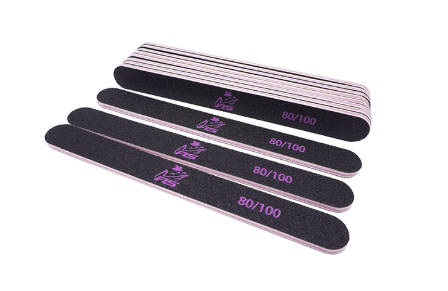
Personalized nail files can combine a practical dual-grit specification with a private-label presentation. Possible discussion points include logo placement, printed surface, shape, size, color and pack format. The documented product range includes custom private-logo black, white and zebra-grey files, along with 100/180 configurations.
Artwork should be reviewed together with the grit markings. A logo should not cover the side label or make the 100 and 180 surfaces difficult to identify. Buyers should approve a sample showing the actual print, edge and abrasive finish before approving a large run of nail files 100/180.
How Should Buyers Review Custom Imprinted Nail Files With Protective Packaging?
When buyers request custom imprinted nail files with protective packaging, the review should cover more than the outer artwork. Confirm the pack count, label information, protection for the abrasive surface, barcode or mark requirements and whether each file is packed individually or in a grouped pack.
Documented formats include 25-piece packs and support for customized packaging and labels. The exact packaging method remains order-specific. A clear packaging brief should therefore state the file model, grit pairing, quantity per pack, logo artwork and inspection method. This protects the product from being approved on appearance alone.
How Can Felice beauty Help Buyers Build a 100/180 Program?
Which Felice beauty Nail File Products Match This Use Case?
Felice beauty has documented nail-file options using plastic board, EVA, sandpaper and Japanese sandpaper. FLS-NF-001 records a 1.8 mm plastic board with EVA and Japanese sandpaper, 60–240 grit options and stock configurations that include 100/180. FLS-NF-003 records a white sandpaper file with 80–320 grit options and a documented 100/180 configuration. FLS-NF-010 records 80, 100, 180 and 240 grit options.
These records give buyers a starting point for comparing nail file material, dual-grit pairing, color and packaging. Stock and customization status should be confirmed for the exact order rather than assumed from a general product family.
How Do We Support Samples, Logo Approval and Pack Planning?
We can discuss personalized nail files with custom logo, shape, size, color and packaging requirements where the selected format supports those options. Our product records include custom-logo files, packaging and label support, and documented MOQ information for several designs.
We also review pre-production samples before bulk approval. Buyers can use the sample to confirm the 100 and 180 side markings, abrasive feel, print position, edge finish and pack presentation. This gives a business a clearer basis for approving custom imprinted nail files with protective packaging without changing the core specification during production.
FAQ
Q: Which side of a 100/180 nail file is rougher?
A: The 100-grit side is coarser, while the 180-grit side is finer. The actual feel can vary by abrasive material and construction, so buyers should test the approved sample before bulk production.
Q: Can 100/180 nail files be used on acrylic, gel and natural nails?
A: They may be used in different service workflows, but the correct side depends on the material, filing step, pressure and technician protocol. One side should not be described as universally suitable for every nail type.
Q: Are personalized nail files available with custom packaging?
A: Logo, shape, size, color, label and packaging options can be discussed for eligible models. MOQ, artwork requirements, pack count and final production details must be confirmed for each order.