Introduction: The Small Tool That Protects Your Clients’ Natural Nails
One wrong sandpaper file can thin, split, or permanently weaken a natural nail. Whether you’re a seasoned nail technician or just starting out, using the wrong grit or file type can cause irreversible damage to the delicate keratin layers of your clients’ nails.
Using the correct sandpaper nail file offers three essential benefits:
- It preserves nail health by gently shaping without over-filing.
- It ensures client comfort during every manicure.
- It builds long-term loyalty, as clients will return to the technician who keeps their nails strong and beautiful.
After reading this, you’ll confidently choose and use the safest files every time to protect every natural nail that touches your workstation.
1. Why Natural Nails Require Special Care When Filing
Unlike artificial enhancements like acrylics or gel overlays, natural nails are much thinner, more porous, and prone to wear. Filing them requires precision and gentleness, as overuse of abrasive tools can lead to painful thinning or even breakage.
3 Primary Goals When Filing Natural Nails:
- Shape the nail safely without over-thinning.
- Smooth free edge to prevent splits and snags.
- Maintain structural integrity over time.
| Stage | Goal | Safe Grit Range | Common Mistake |
|---|---|---|---|
| Initial shaping | Create desired contour | 180–240 | Using coarse 80/100 grit |
| Refining edge | Remove roughness after cutting/clipping | 240+ | Filing too aggressively |
| Pre-polish smoothing | Prepare surface for product adhesion | 320–400+ | Buffing too long in one direction |
2. Understanding Grit: The #1 Factor for Natural Nail Safety
Grit refers to the coarseness of the file’s surface. A lower number means a rougher texture (e.g., 80 grit), while higher numbers indicate finer abrasives (e.g., 240+ grit).
4 Non-Negotiable Rules for Grit Selection on Natural Nails:
- Never use grits below 180 on bare natural nails.
- Always choose higher grits (240+) for smoothing edges.
- Match grit to the task: shaping vs. buffing.
- Replace worn-out files to prevent dragging and tearing.
| Grit Range | Texture Feel | Safe Uses on Natural Nails | Risk Level if Misused |
|---|---|---|---|
| 80–100 | Very coarse | None – for acrylics only | High – causes splitting |
| 120–150 | Coarse | Not recommended | Medium – may thin nail plate |
| 180–220 | Medium-fine | Basic shaping | Low if used gently |
| 240–320 | Fine | Smoothing & refining | Minimal |
| 400+ | Extra fine | Buffing & finishing | Safe if not overused |
3. Best Sandpaper File Types & Shapes for Natural Nails
Choosing between disposable and washable files depends on hygiene protocols and frequency of use.
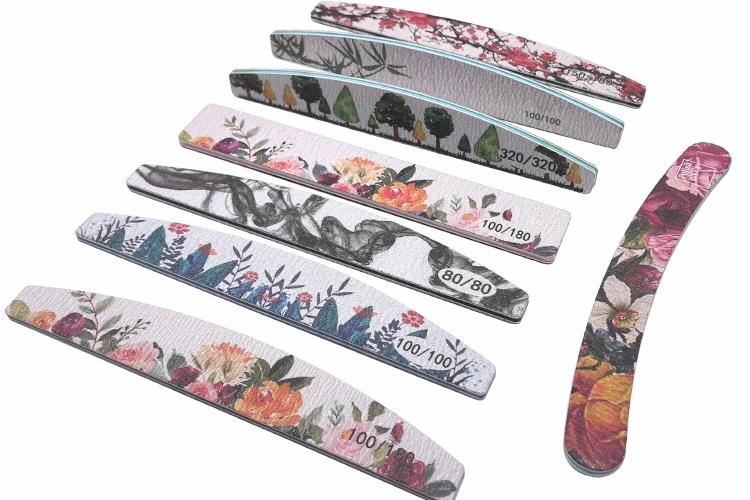
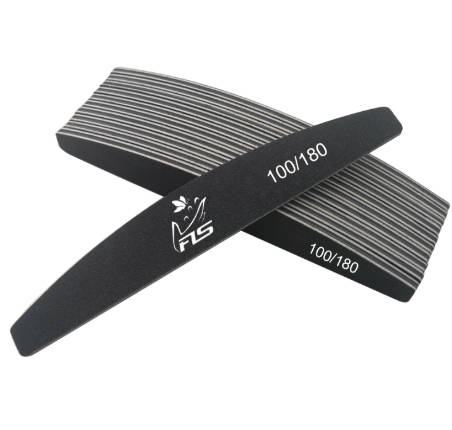
Professional high quality custom private logo white nail file and emery board and Professional high quality custom private logo zebra grey nail file and emery board are examples of washable files made with Japanese sandpaper, offering both safety and durability.
| Natural Nail Service | Recommended Grit | Ideal File Shape | Why It’s Safest |
|---|---|---|---|
| Basic shaping | 180–240 | Straight or banana | Precise edges, less pressure needed |
| Smoothing free edge | 240–320 | Slim straight | Targets narrow areas gently |
| Pre-polish surface prep | 320–400+ | Buffer block | Even pressure across nail surface |
4. Professional Filing Technique on Natural Nails – Step by Step
Using high-quality tools is only half the equation; professional technique ensures results that are safe and beautiful.
Pro Tip: Always check your file’s grit before starting — even the safest file becomes dangerous with poor technique.
Step 1: Preparation & Client Positioning
- Sanitize hands and tools.
- Ensure client’s hand is relaxed and stable.
- Choose correct file based on natural nail thickness.
Step 2: Direction & Angle Control
- File from side to center in one direction only.
- Avoid sawing motion which causes splits.
- Maintain a slight angle parallel to the free edge.
Step 3: Pressure & Speed
- Use light, even strokes.
- Let the grit do the work — never press hard.
- Slow filing allows better control and feel.
Step 4: Finishing & Buffing
- Use fine grit buffer (400+) in small circular motions.
- Avoid excessive buffing that thins nail layers.
- Wipe away dust with soft brush or lint-free wipe.
| Step | Recommended Grit | Technique | Expected Result |
|---|---|---|---|
| Preparation | — | Sanitize & stabilize | Safe work environment |
| Direction & Angle | 180–240 | One-directional filing | Even shape without splits |
| Pressure & Speed | Same as above | Gentle, controlled strokes | Comfort + minimal damage |
| Finishing & Buffing | 400+ | Circular soft motion | Smooth surface ready for polish |
5. Dangerous Mistakes That Destroy Natural Nails
| Common Mistake | Damage Caused | Immediate Correction |
|---|---|---|
| Using low grit (<180) | Thinning, peeling | Switch to 240+ grit immediately |
| Filing wet nails | Splitting, uneven filing | Dry nails completely before starting |
| Filing back and forth | Layer separation | File in single direction only |
| Reusing worn files | Dragging, tearing | Replace or sanitize regularly |
These mistakes not only compromise nail structure but also result in peeling, breaking, and dissatisfaction — all of which cost you returning clients and damage your professional reputation.
6. Recommended Nail Shapes for Natural Nails & How to File Them Safely
Certain nail shapes naturally support weak nails better than others.
Pro Tip: Oval and squoval shapes are ideal for thin or fragile nails as they reduce corner stress points.
| Shape | Best Client Nail Type | Safe Grit Range | Step-by-Step Filing Tips |
|---|---|---|---|
| Round | Short, weak nails | 240–320 | Follow natural curve; smooth sides into center |
| Oval | Thin or brittle nails | 240–320 | File in arc motion; avoid sharp corners |
| Square | Strong nail beds | 180–240 | File straight across then soften corners |
| Squoval | Most natural nails | 180–240 | Start square then round edges gently |
7. Hygiene & Lifespan of Sandpaper Files for Natural Nails
Most professionals choose disposable or properly sanitizable files for natural nail work because hygiene is non-negotiable in any salon environment.
We protect customer privacy, pay attention to product quality, and provide good after-sales service. All products can be designed and produced as customer request; pre-production sample is always available for quality check before bulk order.
Hygiene standards every salon must follow:
- Use disposable files when possible.
- Sanitize reusable files after every client.
- Store sanitized tools in clean containers.
- Discard any file that shows wear or contamination.
| File Type | Maximum Safe Uses on Natural Nails | When to Replace |
|---|---|---|
| Disposable paper file | Once per client | After each use |
| Washable sponge file | Up to 5 clients (if sanitized) | Once grit dulls or edge frays |
| Metal board + replaceable sandpaper pads (e.g. FLS-PFF-001) | Based on pad condition | When sandpaper loses grit |
8. How to Evaluate & Select High-Quality Sandpaper Files
When buying tools that touch every client’s nails, quality matters more than price. Look for materials that support safety, comfort, and performance.
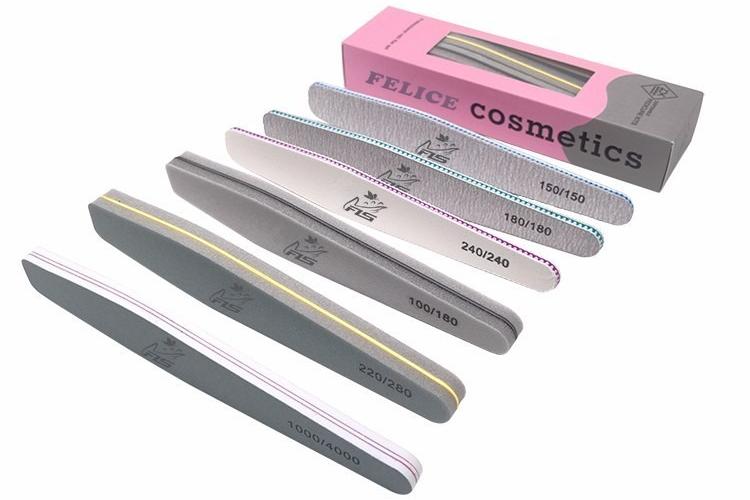
Felice beauty offers professional salon using, durable, washable nail files with low MOQ for custom logo.
| Feature | Why It Matters for Natural Nails | Good Option Example | Poor Option to Avoid | Benefit to Technician |
|---|---|---|---|---|
| Grit consistency | Prevents uneven filing | Zebra grey Japanese sandpaper | Inconsistent coarse-grit files | Safer shaping |
| Material quality | Reduces friction/heat | High elastic sponge + emery | Cheap plastic-backed files | Less hand fatigue |
| Washability | Essential for hygiene | Durable washable sponge buffer blocks | Non-sanitizable wood files | Meets health codes |
| Shape variety | Fits various nail contours | Banana or slim straight | Oversized bulky boards | Precision in tight spaces |
| Custom branding | Professional appearance | Felice beauty OEM support with low MOQ | Generic unbranded tools | Builds trust with clients |
Files from Felice beauty demonstrate exceptional durability and consistent grit placement which means you choose a professional and reliable partner. This reduces hand fatigue during long sessions by allowing smoother strokes without excessive pressure.
9. Training Your Team to Protect Every Natural Nail
Every technician on your team should master these fundamentals:
- Understand grit numbers and uses
- Always file in one direction
- Match shape to client nail type
- Sanitize or dispose after each use
- Recognize when a file is worn out
- Communicate safety with every client
Uniform technique across your team leads to consistent results, glowing reviews, and a loyal client base that trusts your salon above others.
10. Pro Efficiency Tips When Working Exclusively on Natural Nails
Optimize your work pace without compromising safety by following these habits:
- Pre-select files by grit before appointments
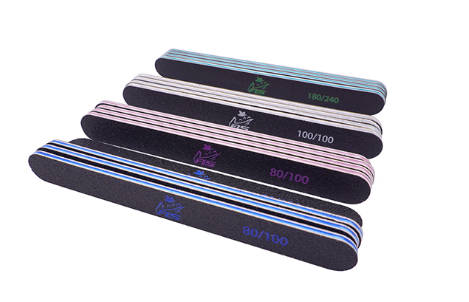
- Use dual-sided files (e.g., 180/240) for multitasking
- Choose ergonomic file shapes like banana curve
- Incorporate buffer blocks with built-in layers
- Replace dull files mid-day to maintain precision
- Train muscle memory through repetitive practice
Choosing small tools like Felice beauty’s mini-size nail buffer block can dramatically speed up manicures while protecting delicate nails — proving that efficiency doesn’t have to come at the cost of care.
Conclusion: Healthy Natural Nails = Loyal, Returning Clients
Choosing the best sandpaper nail file isn’t about cost — it’s about protecting your reputation one nail at a time. Every filing stroke is either an investment in your client’s trust or a risk to their natural beauty. Use precision, premium materials, and professional technique to ensure that every natural nail you touch leaves stronger than it arrived.
FAQ
Q: What grit of sandpaper nail files is safest for natural nails?
A: For natural nails, start with 180-240 grit for shaping to avoid thinning, and use 400+ grit for buffing to ensure safety and smoothness.
Q: How to file natural nails with sandpaper nail files without damage?
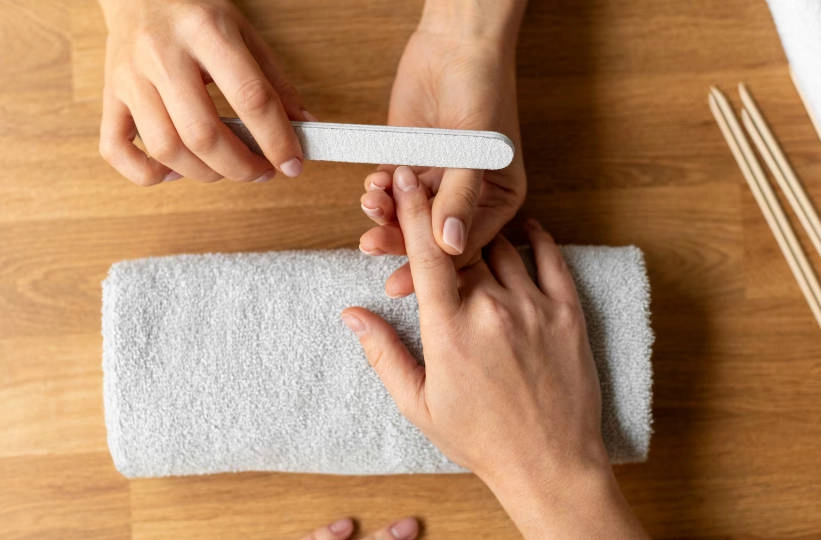
A: Always file in one direction with light pressure on natural nails, using proper grit ranges to prevent splits or weakening.
Q: What are the best sandpaper nail file types?
A: Disposable or washable sandpaper nail files with fine grit are ideal for natural nails, offering hygiene and gentle abrasion.