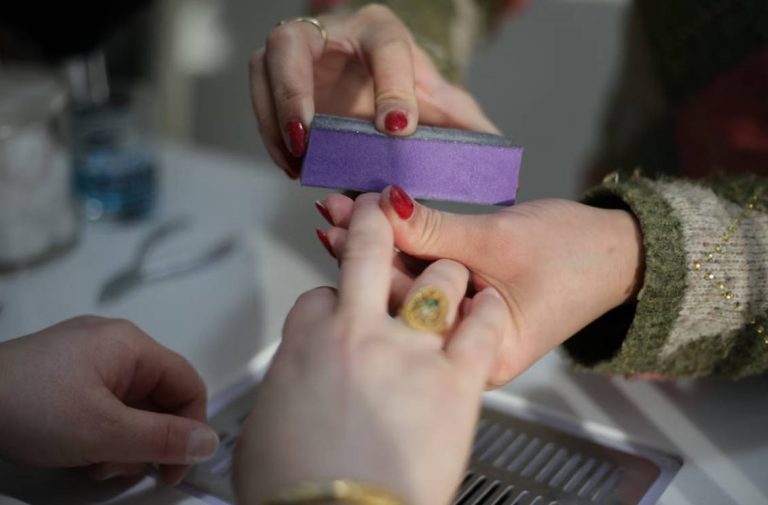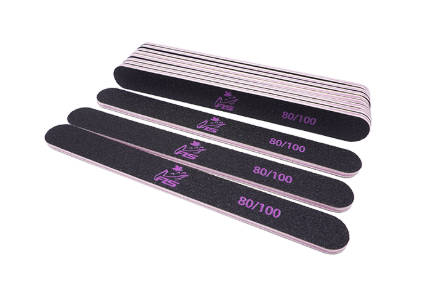
When you’re deciding how to file almond nails, look at the length first. You need enough nail beyond the fingertip to taper both sides into a soft, centered tip. Support the finger, file from one side toward the center, then switch sides and look straight down the nail. The silhouette comes from the line you leave behind. The angle of the file determines which part of the edge you remove. At the salon table, a useful first check is whether the nail already has enough free edge to taper without cutting into either sidewall.
How Do You Recognize an Almond Nail Shape?
Choose the outline while the nail still has its original length. Once the free edge has been cut back, there is less room to shape the two shoulders.
Where Should the Tip of an Almond Nail Sit?
Look down at the nail plate and follow its centerline toward the free edge. Use the nail itself as your reference. A fingertip can turn slightly when you hold it, which makes a centered point look crooked in a side view. Pick the spot where the tip should end, then compare how much nail sits on either side. Save a little material at the center for the final rounding pass. A sharp point is easy to soften when the length is still there.
Almond vs Oval Nails at a Glance
When comparing almond and oval nails, look at where the sides begin to narrow. An almond shape has a more visible taper into a small rounded tip. An oval follows a fuller curve across the front and leaves more width near the shoulders. If the nail barely clears the fingertip, a soft oval can make better use of the available edge. Let the nail grow before trying to make the taper more pronounced.
How Do You File Almond Nails Evenly?
When learning how to file almond nails, stop to check the outline before each side looks finished. A few passes can make a visible difference on a short natural nail.
How Should You Move the Nail File Along Each Side?
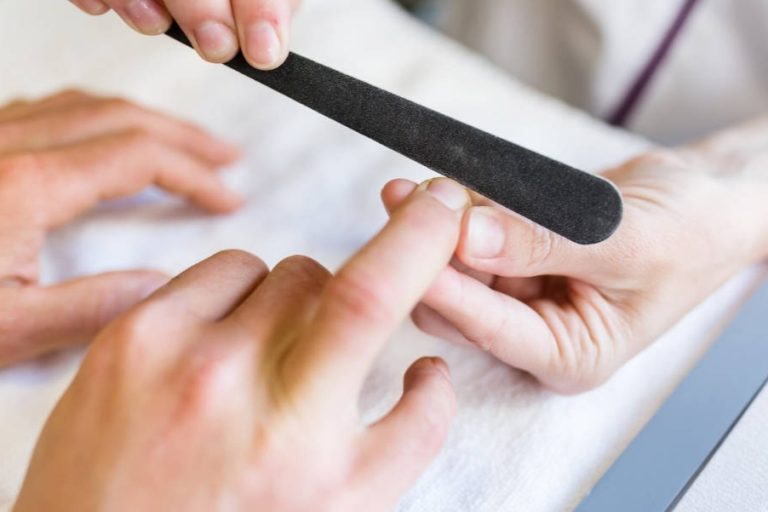
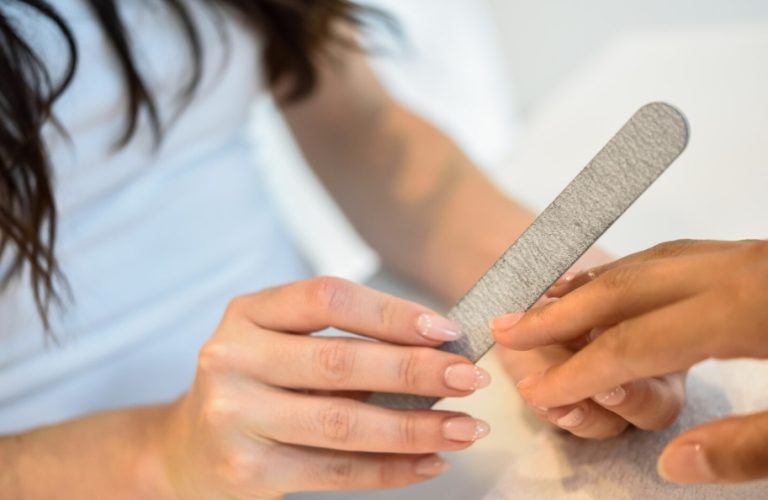
If you teach someone how to shape almond nails, have them support the finger before the first stroke. Set the nail file against one side of the free edge and guide it toward the planned tip. Lift it after the stroke and reset. Work from the other side next. The two sides may need different numbers of passes, so judge the result from above. Once the shape is close, brush away dust and feel for a snag instead of repeating the stroke by habit.
What Filing Angle Keeps the Tip Centered?
Hold the working face so it meets the edge you want to change. Near the shoulder, the stroke feeds into the existing side curve. Closer to the center, a short pass can soften the transition into the tip. If the file slips under the free edge or rides onto the nail plate, pause and change your grip. Check from the front as well as above. The front view can reveal a slanted edge that looked even from overhead.
Common Almond Nail Filing Mistakes
The most useful mistakes to catch show up in the outline. Sweep away the dust before deciding that a side needs another pass.
How Do You Correct an Off-Center Almond Tip?
When the tip looks off-center, settle the finger flat and check again. Find the side that still looks fuller on that nail, then make a small correction to that side alone. Take a fresh look after each pass. If the shorter side has already lost its shoulder, chasing it can leave both edges narrow and the point shorter than the other nails. A gentler almond or an oval is often the shape you can finish with the length you have.
How Can You Avoid Overfiling the Sidewalls?
When showing a client how to file almond nails, keep the taper on the free edge. If you have to pull skin away just to reach the line you want, the outline may be asking for more length than the nail has. Another common mistake is trying to remove a rough catch with the same pressure used to shape the sides. Inspect the catch from different angles. A fine pass across that small area can smooth the edge while leaving the broader curve alone. Stop as soon as the edge feels even.
Choosing Nail Files for Salon Almond Shaping
For a salon, the choice of nail file comes down to the edge work on the schedule and how the tool feels in the technician’s hand.
What Nail File Grit Suits Natural Nails?
Choose the nail file grit for natural nails based on the edge in front of you. Use a finer surface for light refining and check the result after a gentle pass.
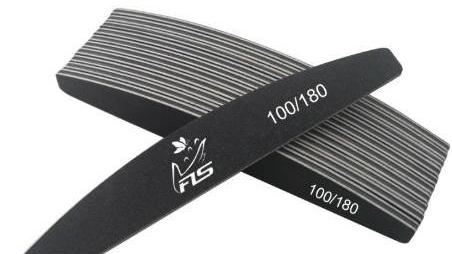
Felice beauty lists several grit grades for the FLS-NF-001 zebra-gray file, including 180 and 240. Within the documented abrasive range, a higher grit number identifies a finer grade. The FLS-NF-001 has a plastic board and EVA between the core and zebra-gray abrasive. The model is listed in two widths. Grit, width and support can be specified separately when ordering samples.
How Can Felice beauty Match a File Profile to the Service?
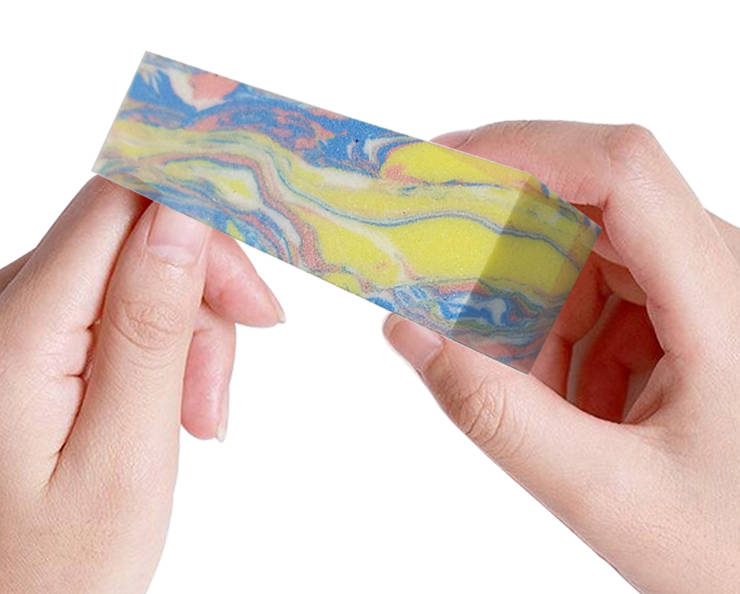
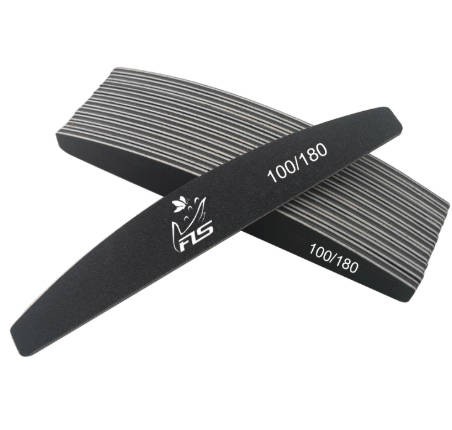
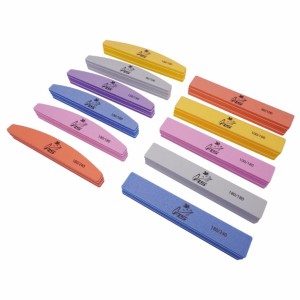
Felice beauty works with straight, curved and half-moon file profiles. The toolkit also includes sandpaper, sponge-supported and glass nail file formats with different constructions. Standard shapes have documented dimensions, while custom sizes need to be checked for the particular order. Felice beauty offers pre-production samples for buyers to review before bulk ordering. The sample brief can identify the abrasive, shape, backing and thickness.
Set two samples beside each other and try one controlled pass with each. Check which profile lets the technician see the shoulder clearly and touch only the free edge.
The narrow FLS-NF-001 measures 17.8 by 2.0 cm, and the wider format measures 17.8 by 2.8 cm. Both are listed with an overall thickness of 0.4 cm and a 1.8 mm core. The abrasive on that model is Japanese sandpaper. The model documentation treats width and grit as separate choices. The listed two-face configurations include 100/180 and 180/240.
Those dimensions are useful when comparing exactly how much of the shoulder you can see beside the file.
FAQ
Q: How Do You Shape Short Almond Nails?
A: If you’re figuring out how to file almond nails on short natural nails, start with a mild taper and keep enough width at the shoulders. Round the end lightly. When the free edge is too short for a visible taper, keep a soft oval until there is more length to work with.
Q: How Can You Tell Whether the Almond Tip Is Centered?
A: Look from directly above with the finger lying flat. Compare the left and right curves as they meet the tip, then check from the front for a slanted edge. Judge that one nail before comparing its length with the others.
Q: Can a Fine Nail File Smooth the Tip After Shaping?
A: Yes, if the shape is already balanced and only the edge feels rough. Use the finer surface for a light finishing pass, then check whether the tip still looks centered. The file should take off the catch without flattening the curve.