1. Introduction: Why Nail File Materials Matter
Nail files serve as essential tools in professional and home nail care routines. They help shape natural nails. They also refine enhancements like acrylic or gel. The quality of your nail file greatly affects the results. Beyond shape and grit, the material composition of a nail file determines its performance, durability, and safety.
The proper material makes a big difference. It can prevent smooth shaping from turning into nail damage. It avoids efficient buffing becoming over-filing. It ensures hygienic reuse instead of contamination. This guide looks at the four most common nail file materials—sandpaper, plastic board, sponge, and polishing fabric. It helps you choose wisely based on your needs.
2. Understanding Nail File Basics
2.1 What Is Grit and What Does It Mean?
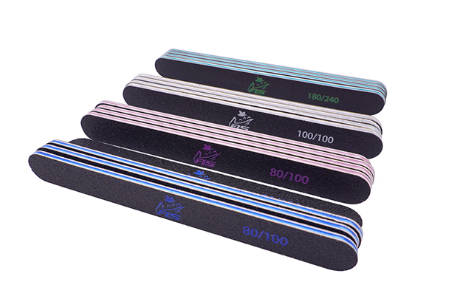
Grit means the roughness of a nail file’s abrasive surface. It is shown by numbers. A low number, like 80 grit, means a rough surface. That is great for removing lots of material. A high number, like 240 grit, means a smoother texture. That works well for gentle smoothing.
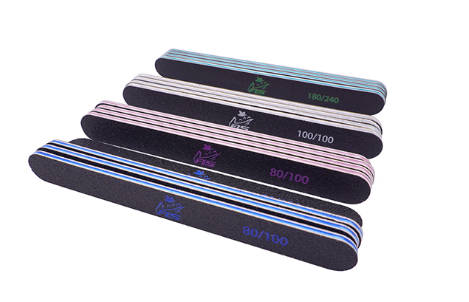
Nail files can be single-grit. They have one even texture. Or they can be double-grit. Those offer two levels of roughness on each side. For example, Felice beauty has files like the “Professional high quality custom private logo zebra grey nail file and emery board”. It comes in various grit options, such as 80/80 or 100/180. This makes them useful for different parts of manicure work.
The way grit works with material changes how well the file does its job. It also affects how soft or strong it is on various nail surfaces.
2.2 Nail Files vs Nail Buffers
A nail file mainly shapes and shortens nails. It reduces length or bulk. On the other hand, a buffer smooths the nail surface. It gives a shiny finish. The material type is important. Harder ones like sandpaper or plastic boards suit filing. Softer ones like sponge or polishing fabrics fit buffing.
Buffers, such as the “High elastic sponge 4 ways nail buffer block with custom logo”, often prepare nails before polishing. Or they boost natural shine without any polish.
3. Sandpaper Nail Files
3.1 What Are Sandpaper Nail Files?
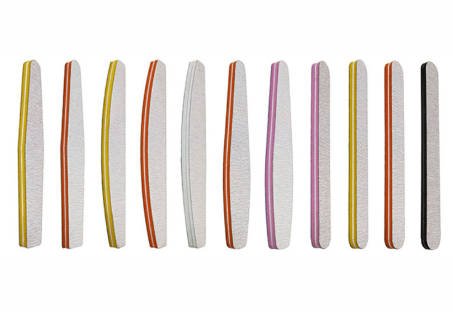
Sandpaper nail files have an abrasive layer. It often uses aluminum oxide or silicon carbide. This layer sticks to a bendy or stiff backing, like EVA or plastic. This type is the most popular. It works well on all kinds of nails and services.
Files like the “Perfect zebra grey sandpaper sponge nail file for manicure” by Felice beauty show this setup. They add sandpaper over sponge for better comfort while using.
3.2 Key Characteristics
- Cutting Efficiency: High because of the sharp abrasive bits.
- Durability: Fair; it wears out with many uses.
- Flexibility vs Rigidity: Changes based on the backing. It could be sponge-like or plastic-based.
3.3 Common Uses
Sandpaper files work in many ways in salons and at home. They handle:
- Shaping natural nails
- Refining enhancements such as builder gels or acrylic
- Filing UV gel nail stickers like Felice beauty’s “Hot Selling Newest Design Gel nail Wraps nail Art stickers”. These are made of gel nail ingredients. They need careful shaping after you apply them.
3.4 Advantages and Limitations
Pros:
- Many grit choices available
- Budget-friendly
- Can get custom logos and designs
Cons:
- Loses power as time goes on
- Needs frequent replacement for cleanliness
4. Plastic Board Nail Files
4.1 What Is a Plastic Board Nail File?
These files have a firm plastic core. It comes with an abrasive surface. They give more steadiness than plain sandpaper files. Unlike sponge or very bendy files, plastic board files offer better control.
Felice beauty’s “Professional high quality custom private logo black nail file” uses a 1.8mm plastic board + EVA + good black sandpaper build. This gives top salon results.
4.2 Key Characteristics
- High Stability: Keeps its form even under force.
- Consistent Pressure Distribution: Great for exact shaping.
- Longer Lifespan: Resists wear more than sponge files.
4.3 Common Uses
They suit:
- Detailed shaping in pro settings
- Filing fake nails, builder gel, or tough enhancements
- Jobs that need steady pressure and angles
4.4 Advantages and Limitations
Pros:
- Better accuracy
- Lasts a long time
- Some can wash
Cons:
- Not very bendy, so not best for thin natural nails
- Feels stiff for new users

5. Sponge Nail Files
5.1 What Is a Sponge Nail File?
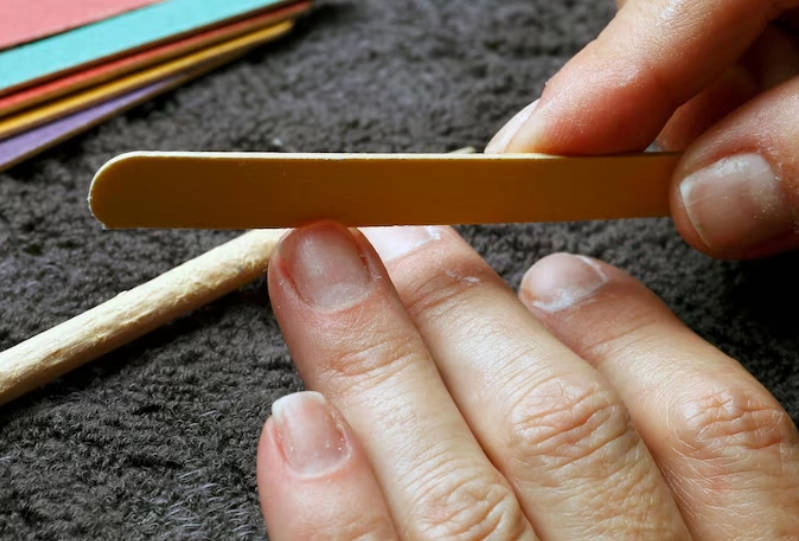
Sponge nail files use a soft foam core. It gets covered with emery or other abrasives. People often see them as buffer tools. That is because of their mild action.
The “Beautiful printing sponge nail file buffer with custom logo” by Felice beauty has high elastic sponge with emery. It provides padded filing.
5.2 Key Characteristics
- Cushioned Filing: Soaks up pressure to stop over-filing
- Gentle on Nail Plate: Ideal for touchy nails
- Even Surface Contact: Spreads the filing smoothly
5.3 Common Uses
They mainly handle:
- Filing natural nails without harm
- Smoothing before gel wraps or polish
- Prepping nails for items like Felice beauty’s “UV Cured Lamp Semi-cured New Gel Toe Nail Stickers”. These need a flat surface to stick well
5.4 Advantages and Limitations
Pros:
- Easy to use
- Good for starters
- Lowers chance of harm
Cons:
- Not very rough; no good for big shaping
- Shorter life than stiff files
6. Polishing Fabric Nail Files
6.1 What Is Polishing Fabric?
This material uses soft cloth-like layers. They create very light abrasion. But they boost shine a lot. These do not shape. Instead, they add final touches.
6.2 Key Characteristics
- Extremely Fine Texture
- Minimal Abrasiveness
- Enhances Natural Luster
6.3 Common Uses
They work well for:
- Last step after buffing
- Boosting shine on natural nails
- After semi-cured gel wraps like those from Felice beauty’s “GEL series”. They give a pro finish without polish
6.4 Advantages and Limitations
Pros:
- Gives sleek, shiny finish
- Safe for everyday use
Cons:
- Not for shaping or cutting tasks
- Needs other file types for full manicure
7. Choosing the Right Nail File Material
7.1 Based on Nail Type
For natural nails, sponge or polishing fabric files file safely. They avoid damage. Gel nails do well with sandpaper files in mid-grit, 100–180. Hard enhancements like acrylic need rough-grit plastic board files. Those shape quickly.
7.2 Based on Application Stage
- Shaping: Sandpaper or plastic board (coarse grit)
- Refining: Sandpaper (medium grit)
- Buffing: Sponge file (fine grit)
- Polishing: Fabric file (ultra-fine)
7.3 Professional vs Home Use Considerations
Pros often pick lasting plastic board files. They use them a lot and need exact work. Home users might choose sponge buffers or two-sided sandpaper tools. Those cut down on mistakes.
Felice beauty does sandpaper nail file OEM. They offer products with low minimum orders. This suits pro salons and single buyers. It helps build a custom tool kit.
8. Nail File Care, Cleaning, and Replacement
8.1 How to Clean Different Nail File Materials
- Sandpaper: Usually throwaway; do not wash them.
- Plastic Board: Wipe with alcohol; some wash okay.
- Sponge: Rinse it, but it may weaken over time.
- Polishing Fabric: Use a soft brush or cloth to clear residue.
8.2 When to Replace a Nail File
Swap it out when you see:
- Grit stops working well
- Clear wear or peeling
- Cleanliness issues after many uses, especially in salons

9. Conclusion: Matching Material to Performance
Each nail file material has unique strengths.
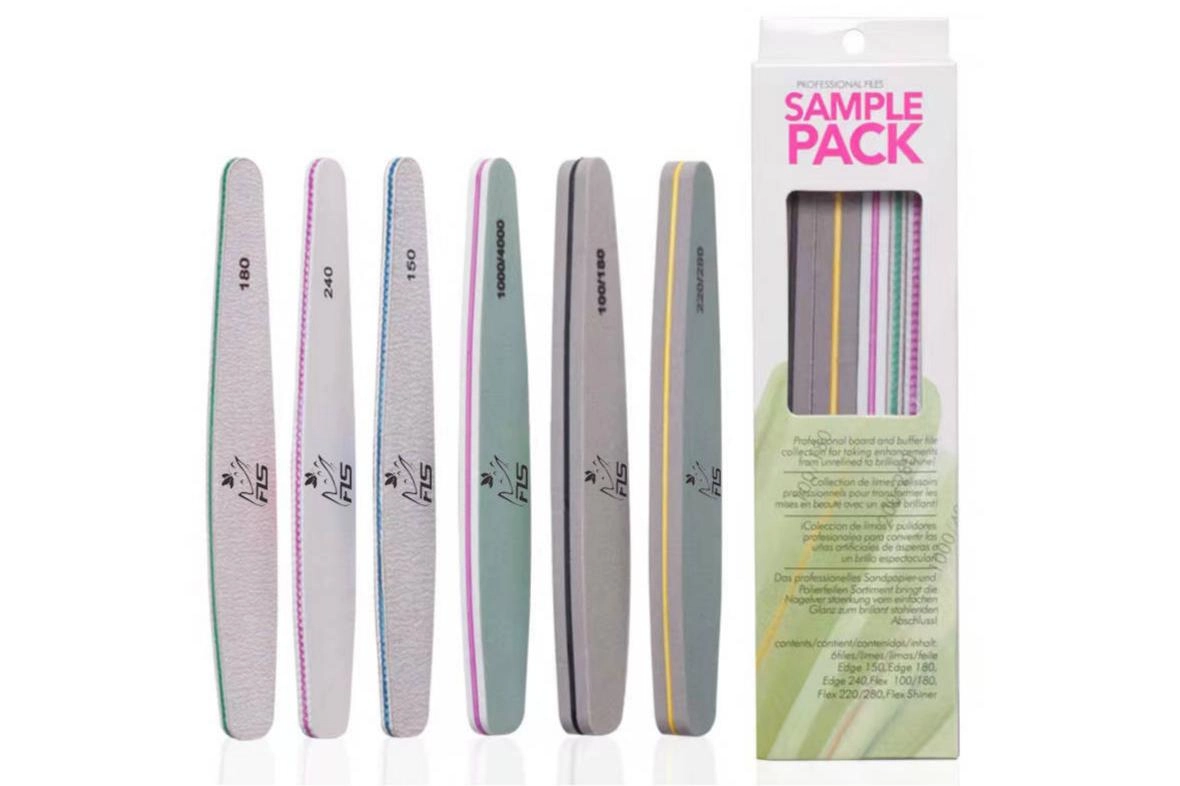
Sandpaper brings versatility; plastic boards give precision; sponge buffers offer comfort; polishing fabric brings brilliance.
Knowing how these materials pair with grit, pressure, and steps helps users. Both pros and hobbyists can get the best results. They do it safely and quickly in every manicure.
FAQ
Q: What is a sandpaper nail file used for?
A: A sandpaper nail file mainly shapes, shortens, and refines natural nails. It also works on enhancements like gel or acrylic. The rough surface removes material fast. Plus, it has many grit choices for various manicure steps.
Q: Is a sandpaper nail file safe for natural nails?
A: Yes, a sandpaper nail file is safe for natural nails if you pick the right grit. Use fine ones, 180–240, to avoid peeling or thinning. Save rough grits for fake nails only.
Q: How long does a sandpaper nail file last?
A: The life of a sandpaper nail file varies by how often you use it and the force you apply. In salons, treat it as one-time use for hygiene. At home, it can last a few weeks until the grit fades.
Q: What is the difference between a sandpaper nail file and a sponge file?
A: A sandpaper nail file cuts strongly. It fits shaping and refining. Sponge files are milder. They suit soft buffing and surface smoothing. Most routines use both for the best outcome.